

Gravie builds its plans for small and midsize businesses, the kind of employers that fill the office parks and shopping centers across the south metro, so plenty of people carry its card without knowing much about it. That is fine until the day someone in the household needs help with drinking or drugs, and suddenly the details matter. Is detox covered? Is a residential stay? Who do you call, and what will it cost?
Peachtree Detox & Residential provides medical detox and residential treatment for adults with substance use disorder at 1008 GA-54 in Fayetteville, south of Atlanta. We accept many insurance plans, and our admissions team can work through a Gravie plan with you. It helps to understand how Gravie is built first, because it does not work like the big-name insurers.
Gravie Runs the Plan for Your Employer
Gravie describes itself as a third-party administrator, or TPA. Your employer funds the plan, and Gravie runs it on the employer’s behalf: it holds the plan details, confirms eligibility and benefits, pays claims, and handles prior authorization and utilization review, the process of checking whether care is medically necessary. Gravie’s plans are self-funded or level-funded. Level funding means the employer pays a steady monthly amount, while the plan underneath still works like a self-funded one.
That structure decides which rules your plan follows. The Centers for Medicare & Medicaid Services explains that an employer’s health plan can be insured, meaning it buys coverage from an insurance company that the state regulates, or self-funded, meaning it pays claims directly under federal oversight. CMS also notes that federal parity law generally applies to group plans of employers with more than 50 employees. It does not force a plan to cover substance use treatment, but when a plan does, it keeps the plan from putting tighter limits on that care than on comparable medical care. Plans from smaller employers are generally outside the parity law itself; insured small-group plans pick up similar protections through the Affordable Care Act, while small self-funded plans may not. For a Gravie member, the plan document your employer provides is where the answer actually lives, and CMS suggests asking your employer’s plan administrator whether your coverage is insured or self-funded.
The Network Logo on Your Card, and Why It Matters
Gravie does not build its own network of doctors and treatment programs. It rents existing ones. According to Gravie, its plans use Aetna Signature Administrators, the Cigna Healthcare Open Access Plus or LocalPlus networks, or HPS, whose cards may show Paymedix or First Health. Whichever logo is on your card is your network. A program contracted with that specific network is in-network for you, at the network’s rates, so the question for any program is whether it holds a contract with the network on your card.
Here is the part that trips people up. If you or a treatment program call Aetna or Cigna to check your coverage, the answer may come back “not covered,” because Aetna or Cigna is not actually running your plan. Gravie tells providers to verify Gravie members through Gravie, not through the network. Prior authorization also routes differently depending on the logo: Gravie handles it for plans on the Cigna networks, while plans on the Aetna and HPS networks use separate medical-necessity review partners named on Gravie’s provider materials.
So when you call about treatment, start with the number on your Gravie card, and have the card in hand. The network logo and group number on it tell everyone involved where the request needs to go. The same logos appear on ordinary Aetna and Cigna cards, but Aetna rehab coverage and Cigna rehab coverage through those insurers follow their own plan rules. On a Gravie card, the Gravie plan document is the one that counts.
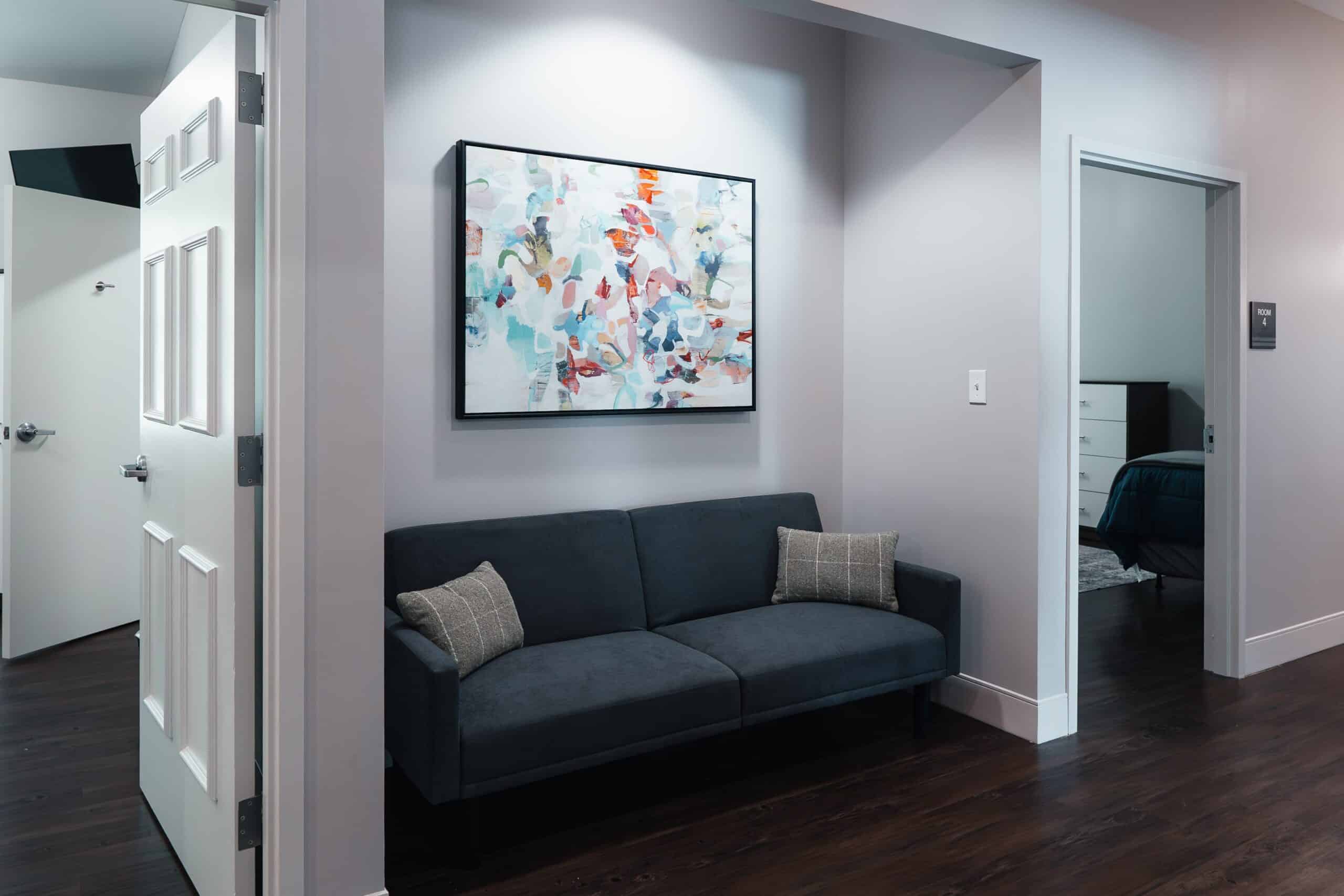
Tour Our Detox and Residential Treatment Center in Georgia



How Gravie Plan Designs Change the Cost of Detox
Gravie offers employers several plan designs, and two coworkers with Gravie cards can have very different costs for the same week of treatment.
- Comfort: Gravie’s flagship design gives members no-cost access to many in-network services, including primary care, specialist visits, and mental health care in a doctor’s office. A detox or residential stay is facility care rather than an office visit, so ask how your plan treats it.
- ComfortFit and copay plans: ComfortFit keeps many no-cost in-network services but adds cost sharing for others. Copay plans use more traditional cost sharing, with payments due for certain services.
- High-deductible plans: For services that fall under the deductible, members pay the plan’s allowed amount until it is met, and Gravie says some of its designs have members cover costs until they reach the out-of-pocket maximum. HealthCare.gov explains that a deductible is what you pay for covered services before the plan starts paying.
- Qualified high-deductible plans with an HSA: These pair a high deductible with a health savings account. The IRS explains that HSA money used for qualified medical expenses is not taxed.
Out-of-network care adds another layer. HealthCare.gov describes out-of-network coinsurance as the percentage you pay of the allowed amount, using 40 percent as an example, and notes it usually costs more than in-network coinsurance. Some Gravie members also have Gravie Pay, an interest-free way to spread out-of-pocket costs over time, which is worth asking about if a large bill is the worry.
If Your Employer Gives You a Gravie CHOICE Allowance
Some employers use Gravie CHOICE, a version of what is called an individual coverage health reimbursement arrangement, or ICHRA. Instead of a group plan, the employer sets a fixed allowance that reimburses each worker for an individual health plan the worker chooses, and sometimes for other qualified medical costs. Gravie helps with the shopping and the paperwork, but the insurance itself comes from whichever company sold the individual plan.
If that is your setup, the coverage questions go to that insurer, not to Gravie. HealthCare.gov notes that all Marketplace plans cover substance use disorder treatment as an essential health benefit, including inpatient services, and that they cannot deny coverage because of a pre-existing condition. Network type matters a great deal here. HealthCare.gov explains that an EPO covers care only from providers in the plan’s network except in emergencies, and an HMO generally works the same way, while a PPO lets you use out-of-network providers for an additional cost. Even on a PPO, payment for a particular detox or residential stay still depends on the plan’s terms and approvals. Peachtree Detox & Residential generally does not accept HMO or EPO plans, so if you are choosing a plan with a CHOICE allowance and treatment is on your mind, plan type is worth weighing.
How to Check Your Gravie Benefits for Treatment
One call with the right questions usually gets you most of the way. Gravie Care, Gravie’s member support team, can help with plan details, and our team can check the rest.
- Read the card: Note the network logo, the group number, and the member services number on the back.
- Ask about each level: Ask how inpatient detox and residential treatment for substance use are covered and what you would owe for each.
- Ask about approvals: Ask whether prior authorization or precertification is needed and who reviews it for your network.
- Ask about out-of-network care: Ask whether your plan pays anything outside its network, at what rate, and whether you could be billed for the difference.
- Let us check: Send your details through our confidential insurance verification form, and our admissions team will contact the plan and give you an estimate.
Treatment at Peachtree Detox & Residential
For people whose bodies depend on alcohol, benzodiazepines, or opioids, detox is the step where medical supervision matters most, because alcohol and sedative withdrawal can bring seizures and opioid withdrawal often sends people back to using. Our medical team monitors withdrawal and can use medication-assisted treatment when it fits, including Suboxone, Sublocade, Vivitrol, and naltrexone. SAMHSA lists buprenorphine and naltrexone among the FDA-approved medications for opioid use disorder.
Residential care follows on the same campus, with weekly individual therapy with a master’s-level therapist, cognitive behavioral therapy, dialectical behavior therapy, trauma-informed therapy, family therapy, and AA, NA, and SMART Recovery meetings. We are in Fayetteville, near Peachtree City and Tyrone, about 30 minutes south of Hartsfield-Jackson and within easy reach of I-85 for anyone driving in from across the metro.
Let Us Sort Out the Gravie Details With You
Insurance is rarely the thing that is actually keeping someone up at night. The drinking is, or the pills, or the worry about you or someone you love. You do not have to untangle a TPA, a rented network, and a plan design on your own before you reach out. Contact our team through the admissions page with your Gravie card nearby, and we will check your benefits, explain how care here would be billed, and give you a cost estimate. If your plan will not pay for treatment here, we will tell you plainly and go over private-pay arrangements and other options.
FAQs About Gravie Rehab Coverage for Detox & Residential Treatment
No. Gravie is a third-party administrator. It runs self-funded and level-funded health plans for employers and rents provider networks from Aetna, Cigna, and HPS. That is why benefits and approvals for treatment should be checked through Gravie, using the member services number on your card, rather than through the network named on the front.
Comfort offers no-cost access to many in-network office visits, including mental health care in a doctor’s office. Detox and residential treatment are facility stays, which are usually handled differently, and out-of-network care adds its own costs. Your plan documents and a benefits check can give you a good estimate of what you would owe, though the final amount depends on the care provided and how the plan processes the claim.
With Gravie CHOICE, your coverage comes from the individual plan you bought with your employer’s allowance. Marketplace plans must cover substance use disorder treatment, but which programs are covered depends on that plan’s network and type. Peachtree Detox & Residential generally does not accept HMO or EPO plans, and our admissions team can check a PPO or other plan for you.
Sources
- Centers for Medicare & Medicaid Services. (n.d.). The Mental Health Parity and Addiction Equity Act (MHPAEA). Retrieved from: https://www.cms.gov/marketplace/private-health-insurance/mental-health-parity-addiction-equity. Accessed on November 16, 2026.
- HealthCare.gov. (n.d.). Health insurance plan & network types: HMOs, PPOs, and more. Retrieved from: https://www.healthcare.gov/choose-a-plan/plan-types/. Accessed on November 16, 2026.
- HealthCare.gov. (n.d.). Mental health & substance abuse coverage. Retrieved from: https://www.healthcare.gov/coverage/mental-health-substance-abuse-coverage/. Accessed on November 16, 2026.
- HealthCare.gov. (n.d.). Out-of-network coinsurance. Retrieved from: https://www.healthcare.gov/glossary/out-of-network-coinsurance/. Accessed on November 16, 2026.
- Internal Revenue Service. (2026). Publication 969: Health savings accounts and other tax-favored health plans. Retrieved from: https://www.irs.gov/publications/p969. Accessed on November 16, 2026.
- Substance Abuse and Mental Health Services Administration. (n.d.). Treatment options for substance use disorder. Retrieved from: https://www.samhsa.gov/substance-use/treatment/options. Accessed on November 16, 2026.
Overview
- What Gravie is: A third-party administrator that runs self-funded and level-funded plans for employers. It is not an insurance company.
- The logo matters: Gravie rents provider networks from Aetna, Cigna, and HPS. The network printed on your card decides which programs count as in-network.
- Check with Gravie, not the network: Benefits, eligibility, and approvals run through Gravie or its review partners, not through Aetna or Cigna directly.
- Plan design changes the bill: A Comfort plan, a copay plan, and a high-deductible plan can treat the same detox stay very differently.
- Gravie CHOICE is different: If your employer gives you an allowance to buy your own plan, your coverage comes from that individual plan’s insurer.