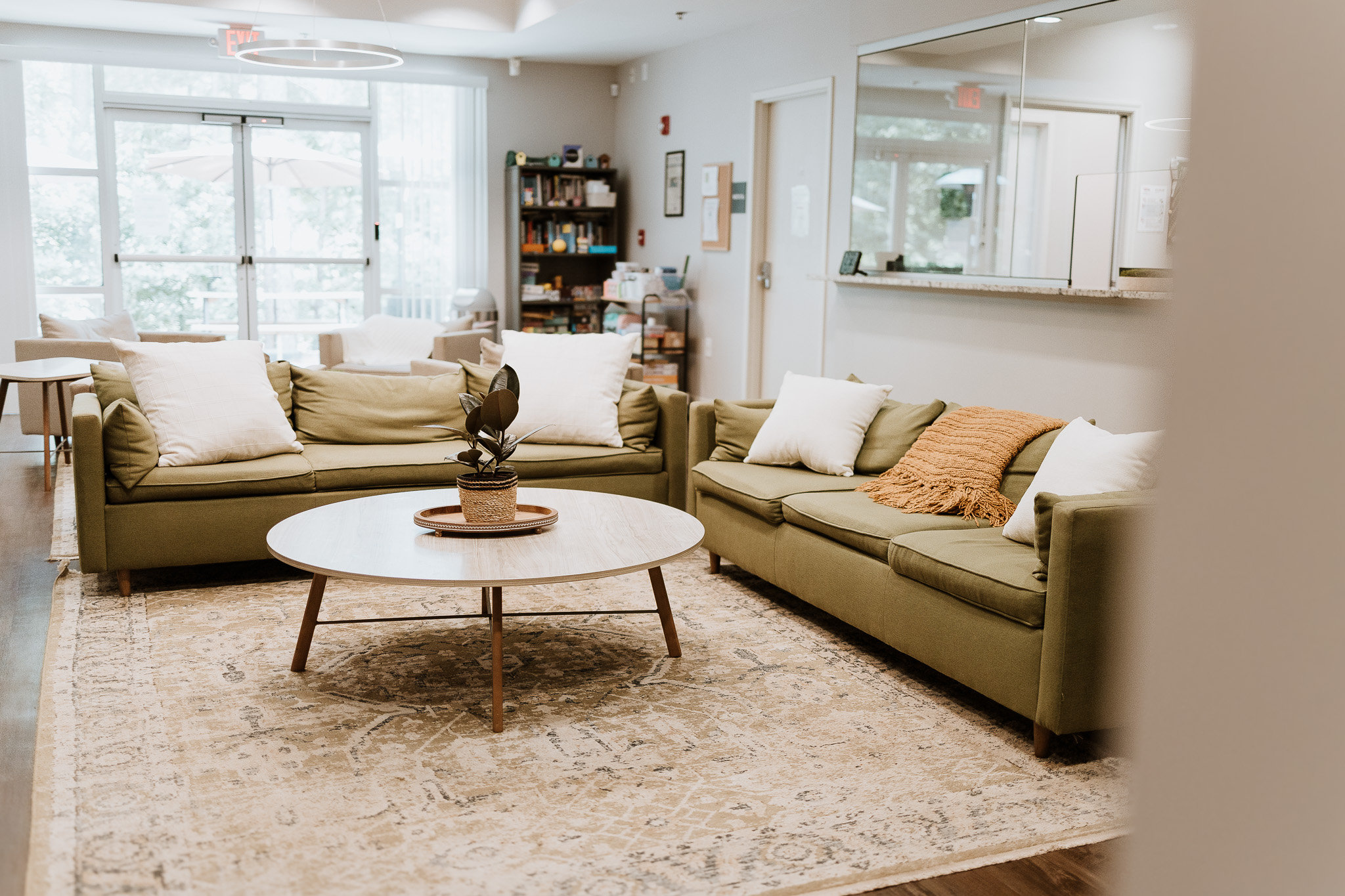
Inpatient rehab, also known as residential treatment plays a critical role in helping clients find recovery from substance use disorder.
At Peachtree Detox & Residential, we offer comprehensive residential and inpatient rehab in Atlanta for individuals struggling with alcohol and substance use disorders once treatment in our detox programs has been completed.
Our team provides a caring and supportive environment with personalized treatment plans tailored to each person’s unique needs using evidence-based and holistic therapeutic modalities.
Learn more about our Georgia addiction treatment programs or call us now 470-613-7881.
Begin Inpatient Rehab in Atlanta, Georgia
Peachtree Detox & Residential is a premier provider of addiction treatment services and detox programs in Atlanta, Georgia. If you or someone you love is in need of professional care, reach out to us now.
What Is Inpatient Rehab?
Residential rehab, also called inpatient rehab, is a highly structured, intensive form of addiction treatment. Clients receive round-the-clock medical support and supervision as they focus on their recovery. Individuals will live onsite at our Atlanta treatment center, where they are free from outside distractions and triggers that could cause relapse.
Inpatient rehab provides a safe and secure environment, away from potential triggers and stressors that may have caused them to use. Inpatient rehab is extremely beneficial for those with severe addiction issues, offering a comprehensive approach.
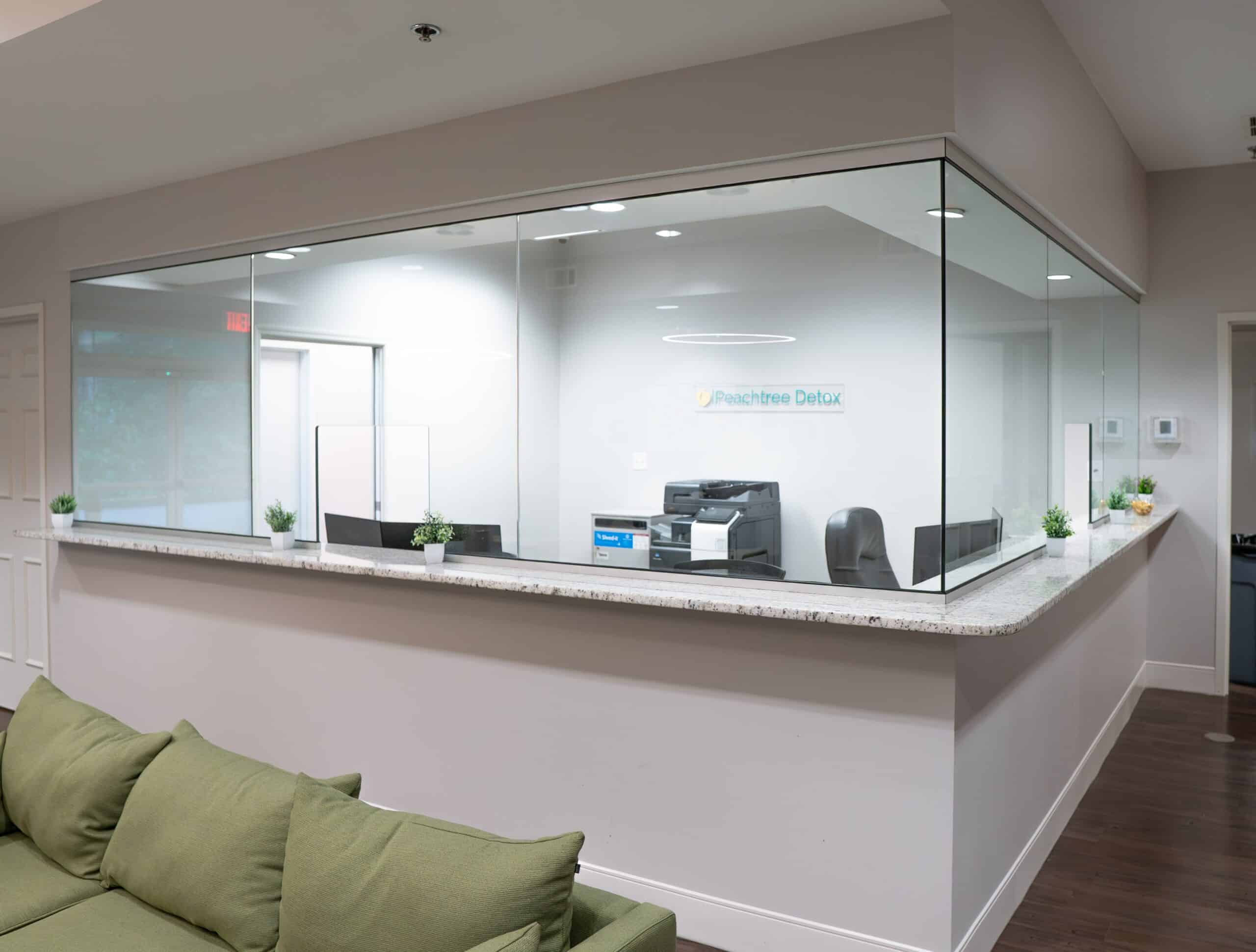
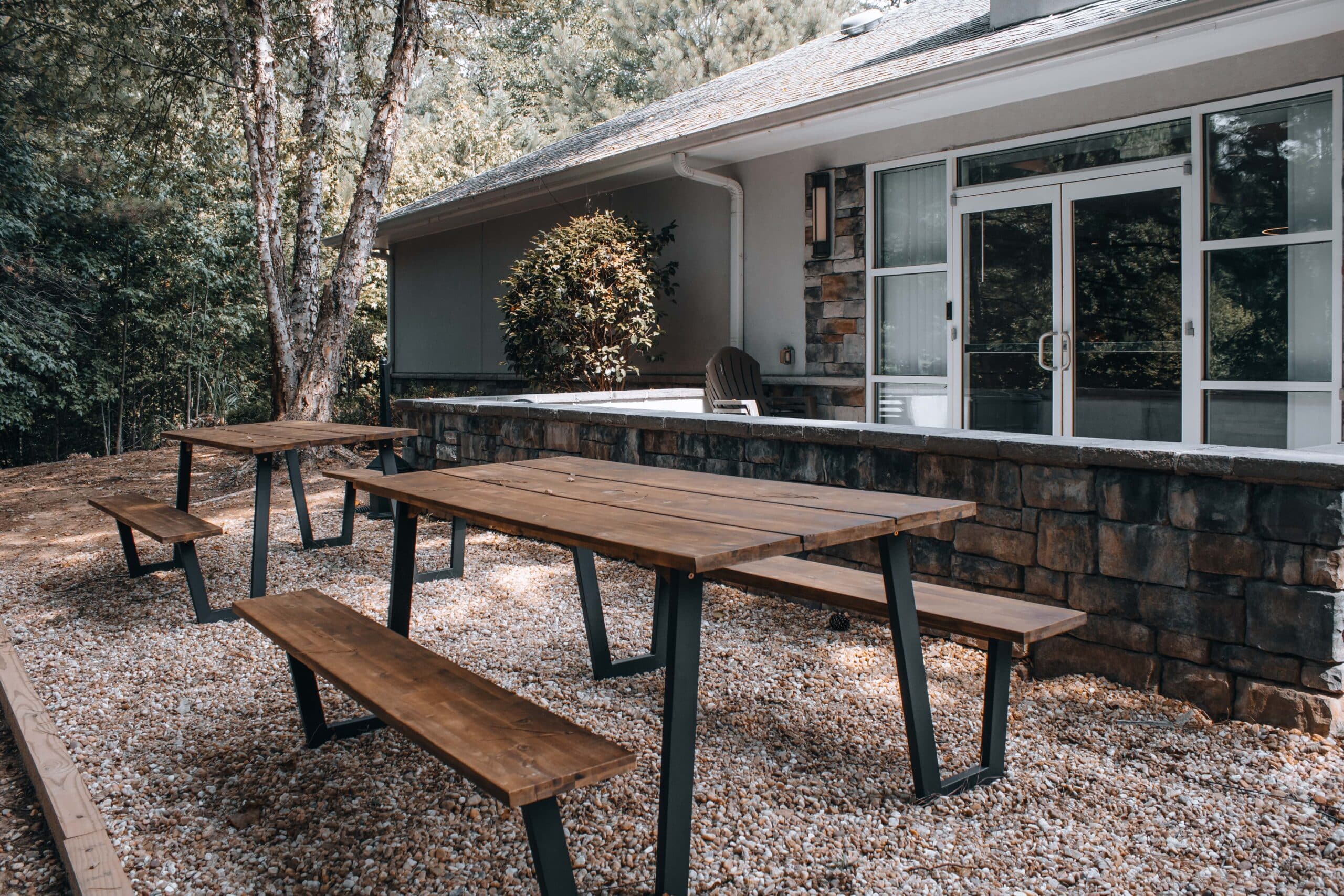
Tour Our Inpatient Rehab in Atlanta, Georgia

How To Know If I’m A Good Fit For Inpatient Rehab?
Deciding whether inpatient rehab in Atlanta is the right addiction treatment program for you depends on several factors. Some things you should ask yourself include:
- Have you attempted to cut down or stop using alcohol and substances but have been unsuccessful?
- Have you tried outpatient rehab only to relapse?
- Do you lack a supportive environment at home?
- Do you find yourself in stressful or triggering situations, places, or around people that encourage substance use?
- Are you having thoughts of self-harm or suicide?
- Do you have to drink or use substances just to function?
If you’re still unsure whether inpatient rehab in Atlanta, is right for you, our compassionate admissions team can help recommend an appropriate level of care.
Therapeutic Modalities During Residential Rehab
During our residential rehab program in Atlanta, individuals can expect to receive comprehensive and personalized treatment following a thorough evaluation. We provide a varying range of services designed to help individuals address the physical, psychological, and emotional aspects of addiction. Our key treatment services include:
Medically-Supervised Detox
Most people need to start their rehab with medically supervised detox to withdraw from alcohol or drugs safely. We monitor our clients 24/7 and help them manage their withdrawal symptoms for a successful detox process.
Medication-Assisted Treatment (MAT)
Medication-assisted treatment (MAT) can be included as part of your treatment plan using FDA-approved medications to help manage withdrawal symptoms, address cravings, and address any co-occurring mental health issues.
Individual Therapy
Our clients participate in one-on-one confidential therapy sessions with our licensed therapists to address their underlying issues contributing to addiction, set recovery goals, develop coping strategies, and address any emotional and mental health issues and concerns.
Cognitive Behavioral Therapy (CBT)
Cognitive Behavioral Therapy is a form of talk therapy that focuses on the relationship between thoughts, emotions, and behaviors.
Trauma Therapy
We believe that trauma can exacerbate addiction, and vice versa. We offer trauma therapy to help clients overcome setbacks and create new coping skills.
Group Therapy
Group therapy sessions provide opportunities for our clients to connect with one another, share experiences, receive peer support, learn new coping skills, practice socialization and communication skills, and learn from each other’s perspectives and insights.
Holistic Therapy
We utilize a variety of holistic approaches, such as meditation, mindfulness, yoga, and art therapy, to help promote healing, lower stress and anxiety levels, and improve physical and mental health.
Medical Support
At our inpatient rehab in Atlanta, our clients have access to around-the-clock medical support from our addiction and healthcare professionals. They are available to provide necessary interventions whenever they are needed, day or night.
Nutritious Meals
Proper nutrition is a vital component of addiction recovery. Our clients are provided well-balanced meals as part of their treatment and care plan. They will also learn how to incorporate healthy eating into their daily routines for continued well-being after returning home.
How Long Does Inpatient Rehab in Atlanta Last?
The duration of residential rehab will vary based on the specific needs, treatment goals, and objectives of the individual. Generally, inpatient rehab can last between 30 to 90 days, sometimes longer. Ideally, the more time you spend in residential rehab, the more successful you will be at reducing the risk of relapses and maintaining your newly found sobriety.
At Peachtree Detox & Residential, we work with our clients to help determine the most appropriate length of stay based on their alcohol and substance use history, support system outside of treatment and other such factors. We also never rush our clients through treatment and encourage them to go at a pace that best works for them, even if it means staying longer than 90 days.
Does Health Insurance Cover Residential Rehab?
Most health insurance plans cover some or all of the costs of inpatient rehab in Atlanta. Our intake specialists would be happy to assist you with determining your insurance coverage benefits for inpatient rehab in Atlanta, Georgia.
Additionally, some employers offer financial assistance with substance use and mental health disorder treatment. If you’re wondering what you’re coverage options our, we provide a free insurance verification to help you understand what your options are.
Begin Inpatient Rehab in Atlanta Today
Are you ready to take the first steps on your recovery journey? Peachtree Detox & Residential will walk alongside you as you begin inpatient rehab in Atlanta.
Our caring and compassionate team provides comprehensive treatment options and works collaboratively with you to develop an individualized care plan. Contact us today to get started retaking control of your life for a brighter, substance-free future.
FAQ About Inpatient Rehab in Atlanta
The use of Suboxone (buprenorphine/naloxone) during inpatient rehab depends on your individual treatment needs and medical history. Medication assisted treatment may prove integral to helping people who struggle with opioid use disorder (OUD) get sober and lead a more fulfilling life.
Preparing for inpatient rehab can feel overwhelming, but having the right items will help you feel comfortable and focused on your recovery. Here’s your comprehensive packing checklist: <h3 class=”text-lg font-bold text-text-100 mt-1 -mb-1.5″>Essential Documents</h3><ul class=”[&:not(:last-child)_ul]:pb-1 [&:not(:last-child)_ol]:pb-1 list-disc space-y-1.5 pl-7″><li class=”whitespace-normal break-words”><strong>Identification:</strong> Valid driver’s license, passport, or state ID</li><li class=”whitespace-normal break-words”><strong>Insurance Information:</strong> Insurance card and any relevant policy details</li></ul><h3 class=”text-lg font-bold text-text-100 mt-1 -mb-1.5″>Clothing (1-2 weeks worth)</h3><ul class=”[&:not(:last-child)_ul]:pb-1 [&:not(:last-child)_ol]:pb-1 list-disc space-y-1.5 pl-7″><li class=”whitespace-normal break-words”><strong>Comfortable, modest clothing:</strong> Bring a mix of short- and long-sleeve shirts. Be cautious when packing tank tops or low-cut tops, which may be against the dress code</li><li class=”whitespace-normal break-words”><strong>Weather-appropriate items:</strong> Long pants, sweatpants, sweatshirts, and jackets</li><li class=”whitespace-normal break-words”><strong>Sleepwear:</strong> Comfortable pajamas or nightgowns</li><li class=”whitespace-normal break-words”><strong>Undergarments and socks:</strong> Enough for your stay</li><li class=”whitespace-normal break-words”><strong>Activewear:</strong> For fitness activities and recreational therapy</li></ul><h3 class=”text-lg font-bold text-text-100 mt-1 -mb-1.5″>Footwear</h3><ul class=”[&:not(:last-child)_ul]:pb-1 [&:not(:last-child)_ol]:pb-1 list-disc space-y-1.5 pl-7″><li class=”whitespace-normal break-words”><strong>Sneakers:</strong> For outdoor activities and exercise</li><li class=”whitespace-normal break-words”><strong>Comfortable walking shoes:</strong> For daily wear</li><li class=”whitespace-normal break-words”><strong>Flip-flops or shower shoes:</strong> For personal hygiene</li></ul><h3 class=”text-lg font-bold text-text-100 mt-1 -mb-1.5″>Personal Care Items</h3><ul class=”[&:not(:last-child)_ul]:pb-1 [&:not(:last-child)_ol]:pb-1 list-disc space-y-1.5 pl-7″><li class=”whitespace-normal break-words”><strong>Hygiene essentials:</strong> Toothbrush, toothpaste, shampoo, soap, deodorant</li><li class=”whitespace-normal break-words”><strong>Personal medications:</strong> In original containers with clear labels</li><li class=”whitespace-normal break-words”><strong>Glasses/contacts:</strong> If needed, plus backup pairs</li></ul><h3 class=”text-lg font-bold text-text-100 mt-1 -mb-1.5″>Comfort Items</h3><ul class=”[&:not(:last-child)_ul]:pb-1 [&:not(:last-child)_ol]:pb-1 list-disc space-y-1.5 pl-7″><li class=”whitespace-normal break-words”><strong>Reading materials:</strong> Recovery-focused books, journals, or spiritual texts</li><li class=”whitespace-normal break-words”><strong>Photos:</strong> Pictures of family, friends, or pets for motivation</li><li class=”whitespace-normal break-words”><strong>Notebook and pens:</strong> For journaling and taking notes</li></ul><h3 class=”text-lg font-bold text-text-100 mt-1 -mb-1.5″>Items to Leave at Home</h3> Generally, items which are not advised to bring include: Alcohol/illicit drugs. Weapons (such as knives). Sharp objects (such as scissors). Toiletries that contain alcohol (such as mouthwash). Also avoid bringing: <ul class=”[&:not(:last-child)_ul]:pb-1 [&:not(:last-child)_ol]:pb-1 list-disc space-y-1.5 pl-7″><li class=”whitespace-normal break-words”>Large amounts of cash or valuables</li><li class=”whitespace-normal break-words”>Clothing with drug/alcohol references or inappropriate imagery</li><li class=”whitespace-normal break-words”>Opened over-the-counter medications</li></ul>
Here’s what your journey will look like: <h3 class=”text-lg font-bold text-text-100 mt-1 -mb-1.5″>Arrival and Intake Process</h3> <strong>Your First Day:</strong> When you arrive, you will meet one-on-one with a certified counselor. You will be asked about your drug history and what you would like to accomplish while you are in rehab. This includes: <ul class=”[&:not(:last-child)_ul]:pb-1 [&:not(:last-child)_ol]:pb-1 list-disc space-y-1.5 pl-7″><li class=”whitespace-normal break-words”>Comprehensive medical and psychological assessment</li><li class=”whitespace-normal break-words”>Review of your substance use history and treatment goals</li><li class=”whitespace-normal break-words”>Physical examination and vital signs check</li><li class=”whitespace-normal break-words”>Development of your individualized treatment plan</li></ul><h3 class=”text-lg font-bold text-text-100 mt-1 -mb-1.5″>Daily Structure and Activities</h3> Your days will be highly structured to support healing and prevent boredom. Each day is filled with activities and therapies to eliminate boredom and downtime. By learning a new way to live with a new schedule, a person can avoid reverting to old tendencies that could threaten their recovery. <strong>Typical Daily Schedule:</strong> <ul class=”[&:not(:last-child)_ul]:pb-1 [&:not(:last-child)_ol]:pb-1 list-disc space-y-1.5 pl-7″><li class=”whitespace-normal break-words”><strong>Morning:</strong> Healthy breakfast, morning meditation or exercise</li><li class=”whitespace-normal break-words”><strong>Mid-Morning:</strong> Individual counseling sessions</li><li class=”whitespace-normal break-words”><strong>Late Morning:</strong> Group therapy focused on recovery topics</li><li class=”whitespace-normal break-words”><strong>Afternoon:</strong> Educational sessions about addiction and recovery</li><li class=”whitespace-normal break-words”><strong>Late Afternoon:</strong> Recreational therapy, fitness activities, or holistic treatments</li><li class=”whitespace-normal break-words”><strong>Evening:</strong> 12-step meetings, family therapy, or personal time</li><li class=”whitespace-normal break-words”><strong>Night:</strong> Quiet time, journaling, and rest</li></ul><h3 class=”text-lg font-bold text-text-100 mt-1 -mb-1.5″>Therapeutic Approaches</h3> While there can be many differences between types of drug rehab programs and their approaches to treatment, most programs incorporate a few common methods, including: <ul class=”[&:not(:last-child)_ul]:pb-1 [&:not(:last-child)_ol]:pb-1 list-disc space-y-1.5 pl-7″><li class=”whitespace-normal break-words”><strong>Individual Therapy:</strong> One-on-one sessions with licensed counselors</li><li class=”whitespace-normal break-words”><strong>Group Therapy:</strong> Peer support and shared experiences</li><li class=”whitespace-normal break-words”><strong>Family Therapy:</strong> Healing relationships with loved ones</li><li class=”whitespace-normal break-words”><strong>Cognitive Behavioral Therapy (CBT):</strong> Learning new coping strategies</li><li class=”whitespace-normal break-words”><strong>Holistic Therapies:</strong> Yoga, meditation, art therapy, and wellness activities</li></ul><h3 class=”text-lg font-bold text-text-100 mt-1 -mb-1.5″>What to Expect Emotionally</h3> Feeling uncomfortable will likely become your “new normal” as treatment begins. As you learn more about the symptoms and impact of addiction, many of those uncomfortable sensations will begin to fade. It’s normal to experience: <ul class=”[&:not(:last-child)_ul]:pb-1 [&:not(:last-child)_ol]:pb-1 list-disc space-y-1.5 pl-7″><li class=”whitespace-normal break-words”>Initial anxiety and adjustment challenges</li><li class=”whitespace-normal break-words”>Emotional ups and downs as you process your experiences</li><li class=”whitespace-normal break-words”>Growing confidence and hope as you progress</li><li class=”whitespace-normal break-words”>Strong connections with peers and staff</li></ul><h3 class=”text-lg font-bold text-text-100 mt-1 -mb-1.5″>Preparation for Long-Term Recovery</h3> Before the conclusion of inpatient rehab, the clinical team will create an appropriate aftercare plan for the patient, providing them with the necessary resources for continued treatment, healing and growth. This includes: <ul class=”[&:not(:last-child)_ul]:pb-1 [&:not(:last-child)_ol]:pb-1 list-disc space-y-1.5 pl-7″><li class=”whitespace-normal break-words”>Discharge planning with continuing care recommendations</li><li class=”whitespace-normal break-words”>Connection to outpatient services and support groups</li><li class=”whitespace-normal break-words”>Relapse prevention strategies</li><li class=”whitespace-normal break-words”>Family involvement in your ongoing recovery plan</li></ul>
Addiction Treatment in Georgia: Areas We Serve
Peachtree Detox & Residential is committed to providing compassionate, evidence-based addiction treatment services throughout Georgia and the surrounding region.
We understand that seeking help close to home can make all the difference in your recovery journey, which is why we’ve expanded our reach to serve multiple communities with the same high-quality care.
- Acworth
- Alpharetta
- Carrollton
- Fayetteville
- Kennesaw
- Marietta
- Newnan
- Norcross
- Peachtree City
- Sandy Springs