

Everything a person or a family actually needs to decide whether this is the right level of care: what happens inside, how long it takes, what it costs, and how to tell a good program from a well-marketed one.
Residential treatment is one of those phrases everyone half-understands. People picture something from a film, or they conflate it with detox, or they assume it means being locked somewhere. The reality is more ordinary and more demanding than any of those, and the details matter, because this is a decision that costs weeks of someone’s life and a meaningful amount of money.
Peachtree Detox & Residential provides medical detox and residential treatment for substance use disorders in Fayetteville, south of Atlanta. Our Complete Guide to Residential Treatment is the version we give families on the phone, written out, whether you are weighing this for yourself or trying to work out what to recommend to somebody you love.
What Residential Treatment Actually Is
Residential treatment means a person lives at the facility for the duration of care rather than commuting to appointments around a job and a school run. The day is built around the clinical work instead of squeezed in beside it. That is the whole mechanism, and it is worth stating plainly because it is easy to mistake the setting for the treatment.
It is voluntary. It is a voluntary admission. Residents keep their belongings, have a bedroom rather than a ward bed, and can end the stay. What they give up is the ability to skip the hard parts, which is more or less the point. It is not a locked psychiatric unit, it is not an involuntary commitment, and it is not an emergency room.
Clinicians place people using a standardized framework rather than intuition. The American Society of Addiction Medicine’s criteria assess several dimensions at once, including withdrawal risk, medical and psychiatric conditions, readiness, and, importantly, the recovery environment a person would be going back to. That last dimension is why two people with identical drinking histories can correctly be placed at different levels of care. One has a stable home and a sober partner; the other is going back to a house where the substance is present.
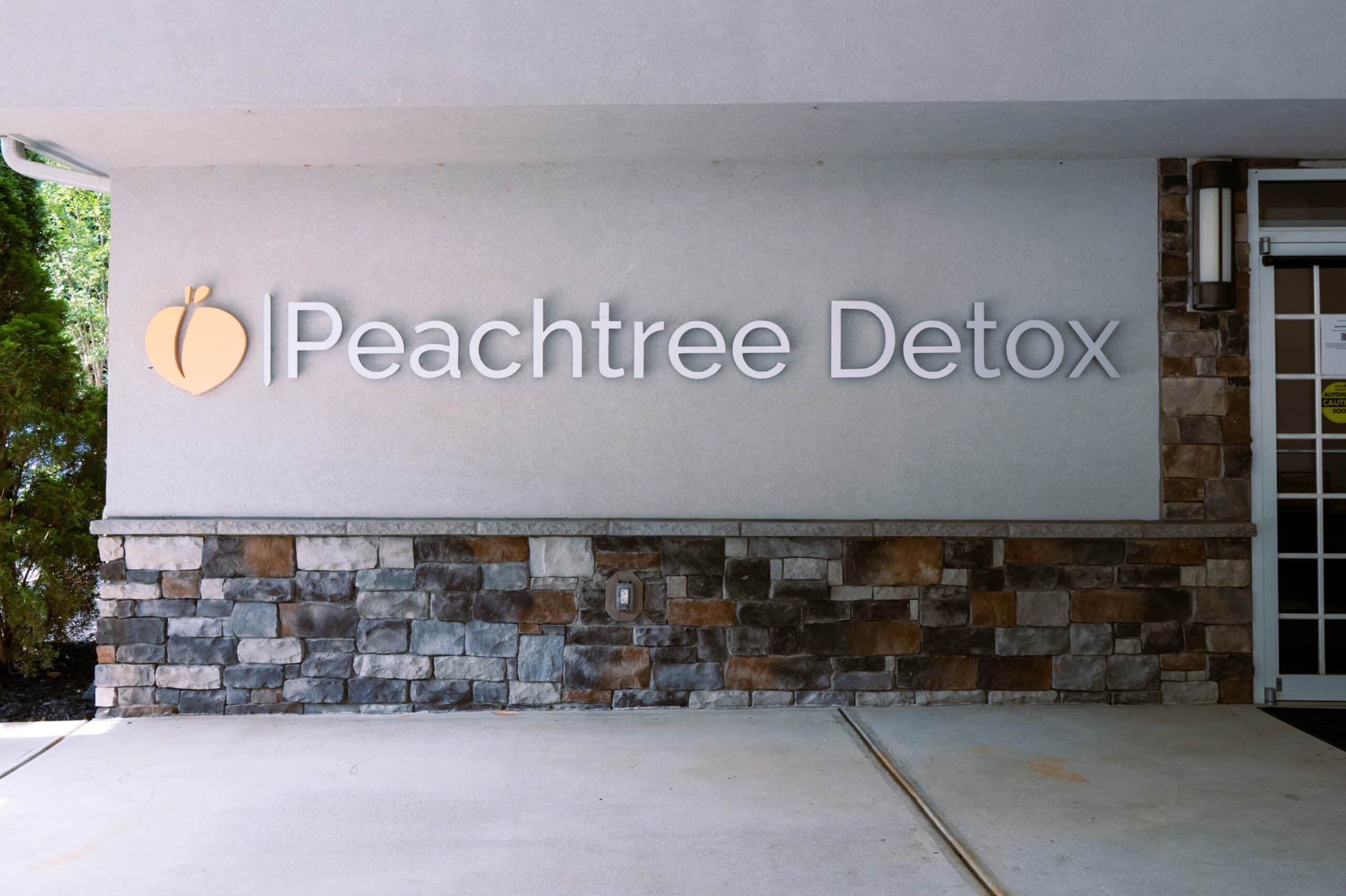
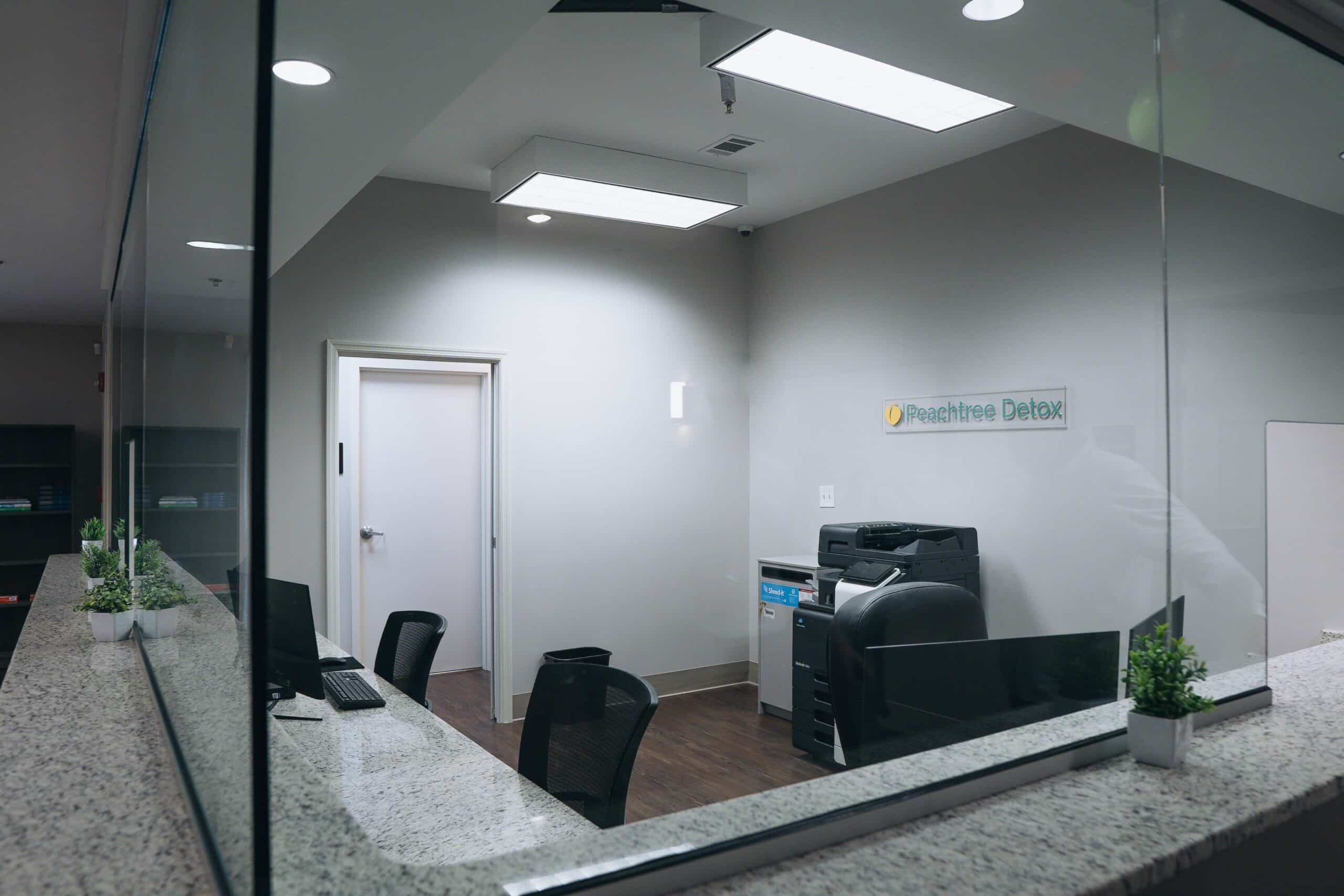
Tour Our Detox in Atlanta, Georgia


Where It Sits in the Continuum
Getting the order right prevents a great deal of wasted time and money.
Detox Comes First, If It Is Needed
Detoxification is the medical process of clearing a substance from the body while a clinical team manages what happens as it leaves. It usually takes days. For alcohol and benzodiazepines it is not optional in any meaningful sense: abrupt withdrawal from either can produce seizures and, in severe cases, delirium tremens, a medical emergency in which the body’s automatic systems for heart rate, blood pressure, and temperature stop regulating themselves. Federal clinical guidance describes detox as having three components, and it is worth knowing all three: evaluation, stabilization, and fostering entry into treatment. That third one is the part programs most often neglect, and it is the bridge into everything below.
Residential Is the Middle
Detox stabilizes the body. It does not change the reasons the substance took hold, rebuild a daily structure, or teach anybody what to do at 8 p.m. on a Friday. Residential treatment is where that work happens, over weeks rather than days, with the person removed from the environment that maintained the problem.
Outpatient Follows
After residential comes structured outpatient care, either a partial hospitalization program or an intensive outpatient program, then ordinary outpatient therapy and community support. The step-down matters. Going from a fully structured residential day straight to nothing is the single most predictable way to lose the progress, which is why the transitions between levels get planned during a stay rather than at the door.
Who Residential Actually Fits
It is not the right answer for everyone, and a program that tells you it is should make you suspicious. The situations where it genuinely earns its cost look like this.
- The home environment works against recovery. A partner who drinks, a household where the substance is present, a neighborhood where supply is two minutes away. Outpatient care asks a person to out-argue that environment every evening.
- Outpatient has already been tried. One unsuccessful attempt at a lower level of care is information rather than failure, and it usually means the level was wrong rather than the person.
- There is a co-occurring mental health condition. When depression, trauma, or an anxiety disorder sits underneath the substance use, treating them separately or in sequence tends not to work. Both need addressing at once.
- The medical picture needs watching. Ongoing withdrawal effects, medication adjustments, or physical health problems that have gone unattended for years.
- Structure has genuinely collapsed. No routine, no sleep pattern, no reliable meals. Some people need the scaffolding rebuilt before anything else can hold.
Equally, there are people for whom residential is the wrong first move: someone in acute medical or psychiatric crisis needs stabilization before anything else, and someone with mild symptoms, a stable home, and a strong support network may do well at a lower level. An honest assessment will say so.
What a Day Actually Looks Like
The single most common question, and the honest answer is that it is structured to the point of being boring, on purpose. Unstructured time is where early recovery comes apart.
Mornings usually start early with a wake-up, medication as prescribed, breakfast, and a check-in group where people name where they are that day. The bulk of the morning and afternoon is clinical: group therapy, individual sessions, and psychoeducation, which means learning what is actually happening in the body and the brain rather than being told to try harder. Evenings tend toward community meetings, reflection, and free time inside the program, with lights out at a fixed hour, because sleep is one of the first things to repair and one of the most important.
The Clinical Components
- Individual therapy: Weekly sessions with a master’s-level therapist, where the specific history gets worked rather than the general topic.
- Group therapy: The workhorse of residential treatment, and frequently underrated. Hearing somebody else describe your interior weather in their own words does something no individual session can.
- Cognitive behavioral therapy: CBT works on the automatic chain running from a trigger to a decision, repeated enough that another response is available when it is needed.
- Dialectical behavior therapy: DBT teaches distress tolerance and emotion regulation, meaning concrete things to do when a feeling arrives faster than reasoning can catch it.
- Trauma-informed care: Trauma therapy addresses what the substance has often been managing, at a pace the person can carry.
- Psychiatric care: Addiction psychiatry handles diagnosis and medication for co-occurring conditions, which frequently get seen clearly for the first time once the substance is out of the picture.
- Medication for the substance use itself: Medication-assisted treatment includes buprenorphine-based options like Suboxone and Sublocade and the opposite mechanism in naltrexone, including injectable Vivitrol. Whether any fits is an individual clinical decision.
- Family work: Family therapy is part of the treatment rather than a visiting policy. A household organized around active addiction for years has its own patterns to unwind.
- Body and routine: Holistic therapies, trauma-informed yoga, nutrition, and sleep are not decoration. Physical repair is part of why people feel different at week three than week one.
How Long People Stay
The familiar 28-day figure is a historical artifact rather than a clinical finding, and it has stuck around because it is a convenient billing unit. In practice, stays commonly run 28 to 45 days, and sometimes considerably longer where the situation warrants it.
Federal research on treatment consistently emphasizes that remaining in treatment for an adequate period of time is one of the strongest predictors of outcome. What “adequate” means is individual: it depends on the substance, the length of use, the co-occurring conditions, the stability of the home, and the progress a person is actually making.
Practically, length is negotiated between the clinical team and the insurer, with periodic review. That is worth knowing in advance so that a coverage review at day 20 is an expected part of the process rather than an alarming surprise. Ask any program you are considering how they handle a continued-stay denial, because how they answer tells you a great deal about them.
What It Costs, and How Coverage Works
Cost is usually what people want to know first and what they are least willing to ask about. The honest position is that most people use insurance, and that what a plan pays varies enough that a general answer is worthless.
Federal parity law requires most plans that cover mental health and substance use disorder benefits to apply comparable rules to them as they do to medical and surgical care. That is the legal reason residential treatment is a covered benefit rather than something a plan can arbitrarily exclude, and it is worth knowing if you have been told otherwise. It does not make coverage unlimited. Deductibles, prior authorization, and continued-stay review are all normal parts of the process.
Peachtree Detox & Residential is in-network with TRICARE East, Select and Prime. For other plans, our team verifies your specific benefits and tells you what your coverage actually looks like before anyone is admitted, and private-pay arrangements are available. Asking what something costs is a normal first question and it commits you to nothing. There is also a plain breakdown of what detox costs if that is the immediate step.
What to Bring, and What Happens on Arrival
Admission day is less dramatic than people expect. There is paperwork, a medical assessment, a search of belongings for safety reasons that is routine rather than accusatory, and an orientation.
Bring a photo ID, insurance card, a list of current medications with the actual bottles, comfortable clothing for about a week with laundry available on site, basic toiletries without alcohol in the ingredients, and a small amount of cash. Leave anything valuable at home. Most programs restrict outside food, anything containing alcohol including mouthwash, and items that could be used for self-harm. Phone policies differ by program and by stage of treatment; at Peachtree Detox & Residential phone contact is available nightly, which is on the more open end for a residential setting.
The practical advice families give each other is worth repeating: pack for a stay rather than a trip, and let the person bring one thing that makes a strange room feel less strange.
How to Judge a Program
Marketing in this field is aggressive and the good and bad programs use similar photography. A handful of questions cut through most of it.
- Ask what happens after. A program that cannot describe its step-down and aftercare planning in specific terms is selling a stay rather than a recovery. This is the single most useful question on the list.
- Ask about co-occurring conditions. Who diagnoses them, who prescribes, and how psychiatric care is integrated rather than referred out.
- Ask about medication. A program that refuses medication-assisted treatment on principle is applying an ideology, not a clinical standard.
- Ask about licensing and accreditation. State licensure is the floor. Ask what it is licensed for, since the license category tells you what level of care they can actually deliver.
- Ask about family involvement. Whether family therapy is genuinely part of the program or a monthly visiting hour.
- Notice the pressure. Urgency about a bed, vagueness about cost, or a guarantee of outcomes are all reasons to slow down. Nobody can guarantee an outcome here, and a program that does is telling you something about itself.
Residential From Around the South Metro
Peachtree Detox & Residential sits at 1008 GA-54 in Fayetteville, minutes from Piedmont Fayette Hospital and roughly 25 minutes south of Hartsfield-Jackson. Families come from Peachtree City, Newnan, Tyrone, Jonesboro, Senoia, and Griffin, close enough that a parent or a spouse can be there for a family session and home the same evening.
That proximity is more useful than it sounds. The households that stay involved through treatment tend to be the ones where the transition home goes better, and involvement is much easier when it does not require a flight.
Working Out Whether This Is the Right Level
The decision worth making first is not which program. It is which level of care, and that is a clinical question rather than a research project. A call is an assessment: somebody who does this daily hears what the past year has actually looked like and says plainly whether detox is needed first, whether residential is warranted, or whether outpatient care would serve better. Being told the answer is a lower level of care is a good outcome, not a wasted call. Reach out through our admissions page and we will go through benefits, timing, and what an admission actually involves. People call for themselves and people call about someone they love, and both are ordinary ways to begin.
Frequently Asked Questions – Our Complete Guide to Residential Treatment
Detox is the medical process of clearing a substance from the body while a clinical team manages withdrawal, and it is measured in days. Residential treatment is the longer stretch afterward, measured in weeks, where a person lives at the facility and works on why the substance took hold and what replaces it. Detox on its own stabilizes the body and changes nothing else, which is why federal clinical guidance describes fostering entry into ongoing treatment as one of detox’s three essential components rather than an optional extra.
Commonly 28 to 45 days, sometimes longer. The familiar 28-day figure is a historical convention rather than a clinical finding. What research consistently supports is that staying in treatment for an adequate length of time is among the strongest predictors of outcome, and what counts as adequate depends on the substance, the duration of use, co-occurring conditions, and the stability of the home a person returns to. In practice, length is reviewed periodically with the insurer as part of the process.
Yes. Residential treatment is voluntary. Personal belongings stay with the resident, and the setting is domestic rather than clinical. It is not a locked unit and it is not a commitment. That is worth saying plainly because the word inpatient carries decades of unhelpful associations. The ability to avoid the difficult parts is what a person gives up by being there, which is the mechanism rather than a side effect.
What happens after discharge. A program that can describe its step-down and aftercare planning in specific terms is thinking about recovery; one that cannot is selling a stay. The gap between leaving a fully structured residential day and having no structure at all is where progress is most reliably lost. Close behind it: how co-occurring mental health conditions are treated on site, and whether the program supports medication-assisted treatment as a clinical decision rather than refusing it on principle.
Sources
- American Society of Addiction Medicine. (n.d.). The ASAM criteria. Retrieved from: https://www.asam.org/asam-criteria. Accessed on September 23, 2026.
- Center for Substance Abuse Treatment. (2006). Detoxification and substance abuse treatment (TIP 45), Chapter 1. NCBI Bookshelf. Retrieved from: https://www.ncbi.nlm.nih.gov/books/NBK64119/. Accessed on September 23, 2026.
- National Institute on Drug Abuse. (n.d.). Treatment and recovery. Retrieved from: https://nida.nih.gov/publications/drugs-brains-behavior-science-addiction/treatment-recovery. Accessed on September 23, 2026.
- Substance Abuse and Mental Health Services Administration. (n.d.). Treatment options for substance use disorder. Retrieved from: https://www.samhsa.gov/substance-use/treatment/options. Accessed on September 23, 2026.
- Substance Abuse and Mental Health Services Administration. (n.d.). Co-occurring disorders. Retrieved from: https://www.samhsa.gov/substance-use/treatment/co-occurring-disorders. Accessed on September 23, 2026.
- Centers for Medicare & Medicaid Services. (n.d.). The Mental Health Parity and Addiction Equity Act (MHPAEA). Retrieved from: https://www.cms.gov/marketplace/private-health-insurance/mental-health-parity-addiction-equity. Accessed on September 23, 2026.
- MedlinePlus. (n.d.). Delirium tremens. Retrieved from: https://medlineplus.gov/ency/article/000766.htm. Accessed on September 23, 2026.
Overview
- What it is: Living at a treatment facility for a period of weeks while receiving structured clinical care. Voluntary, and distinct from both detox and a psychiatric hospital.
- Where it sits: After medical detox, before outpatient care. Detox handles the body over days; residential works on everything else over weeks.
- Who it fits: People whose home environment works against recovery, who have tried outpatient care without it holding, or who have a co-occurring mental health condition that needs treating alongside.
- How long: Commonly 28 to 45 days, sometimes longer. Length is a clinical judgment and a coverage question, not a fixed package.
- What decides success: Less the amenities than whether the program plans the step after it. Discharge without a next level of care is where most gains are lost.