

Clinically reviewed by the Peachtree Detox & Residential clinical team · August 2026
Peachtree Detox & Residential is a Georgia facility, not a Tennessee one. For a lot of Tennessee families, the safest place to stop drinking or using is not the closest place, and the drive down I-24 and I-75 turns out to be shorter than the wait they were facing at home.
The calls that reach us from Tennessee come in at hours nobody chooses. Someone in Hixson cannot hold a coffee cup steady. Someone in Murfreesboro has counted the pills in the bottle twice and gotten two different answers. Somebody is parked outside a house in East Nashville, working up to a sentence they have started and deleted a hundred times. If that is close to where you are tonight, the fact that you are still looking counts for more than it feels like.
Peachtree Detox & Residential is a medical detox and residential substance use program at 1008 GA-54 in Fayetteville, Georgia, on the south side of the Atlanta metro. We do not have a Tennessee location and we do not operate beds there. What we do is treat people who drive or fly down from Tennessee, because the level of care they needed, the coverage they carry, and the timing lined up here instead of at home.
Those families reach us from Chattanooga, Knoxville, Clarksville, Nashville, and as far west as Memphis, for the same thing that brings people in from the Georgia communities in the areas we serve: medically supervised drug and alcohol detox with nurses on the unit day and night, then a residential stay where the real work starts. What changes for a Tennessean is the length of the trip, not the care at the end of it.
Why Some Tennessee Families Start in Georgia
If you have been quietly running the numbers on whether your husband, your daughter, or your own body can survive one more attempt at quitting in the guest room, you are not being dramatic. You are being accurate. Withdrawal from alcohol and from benzodiazepines like Xanax or Klonopin can turn genuinely dangerous, and the person going through it is almost always the last one in the house to believe it.
Tennessee has real treatment capacity, and for plenty of people the right answer is a program twenty minutes from their own kitchen. What sends some families south is a narrower set of circumstances: an opening at the level of care actually needed, a plan that covers it, and enough distance from the phone numbers and the corner store that made the last three attempts collapse by day four.
That distance does clinical work. Detoxing inside the same apartment and the same contact list that fed the problem asks a person to fight on ground that has never once been on their side. Putting the Cumberland Plateau and a state line between someone and every familiar cue buys the first week a fighting chance, which is also why our residential treatment program keeps people onsite instead of sending them home the moment the shaking stops.
What Tennessee Residents Are Actually Coming Off
Nobody in this position needs to be scared into acting. The families reading this are already scared. What helps is a straight account of what the person in the next room is up against the moment they try to stop.
Alcohol is still what fills more detox beds than anything else, and it is the substance families are most likely to wave off. Someone can drink heavily for years and keep a job in Franklin or hold a shift schedule in Knoxville, and the real danger only shows itself once the drinking stops. The National Institute on Alcohol Abuse and Alcoholism defines alcohol use disorder as a medical condition marked by an impaired ability to stop or control drinking despite the damage it is doing, which is also why coming off it is a medical event rather than a test of character. That distance between deciding to quit and having somewhere safe to quit is the whole argument for a detox bed.
The opioid side of the picture has changed in a way that matters for anyone counting on being careful. Tennessee’s health department is direct about it: you cannot tell whether a drug contains fentanyl by looking at it, smelling it, or tasting it. Fentanyl is a syntheticopioid many times stronger than morphine or heroin, and it turns up mixed into heroin, into counterfeit prescription pills, and into stimulants like cocaine and methamphetamine, blended without any equipment that would spread it evenly. The state legalized fentanyl test strips for personal use in March 2022 and added them to its overdose prevention program, and naloxone is sold at Tennessee pharmacies without a prescription, covered at minimal cost by TennCare and many other plans. Those tools lower the odds of dying tonight. They do not touch the disorder underneath, which is what supervised fentanyl detox and the weeks that follow are for.
Tour Our Detox in Atlanta, Georgia
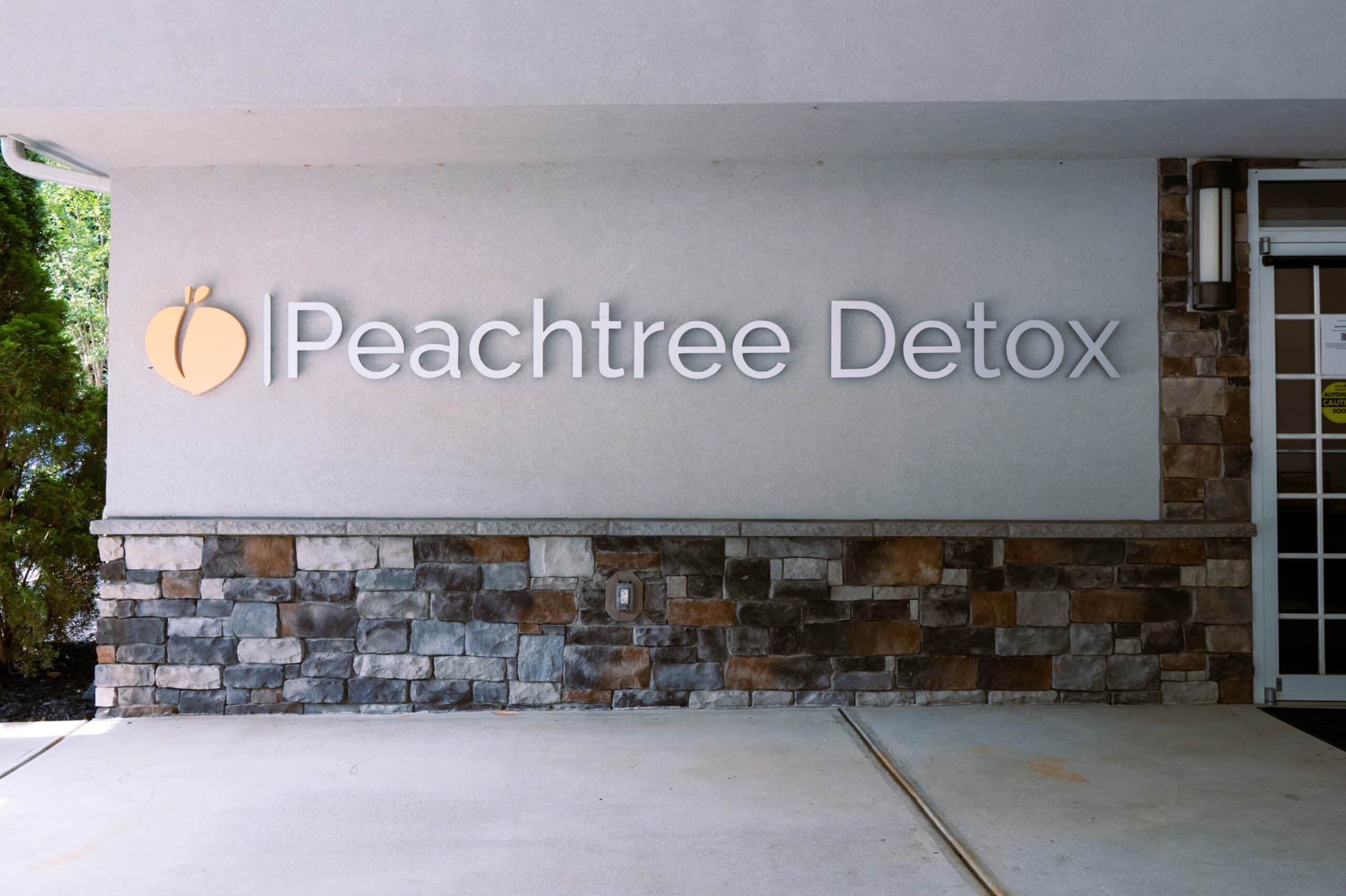


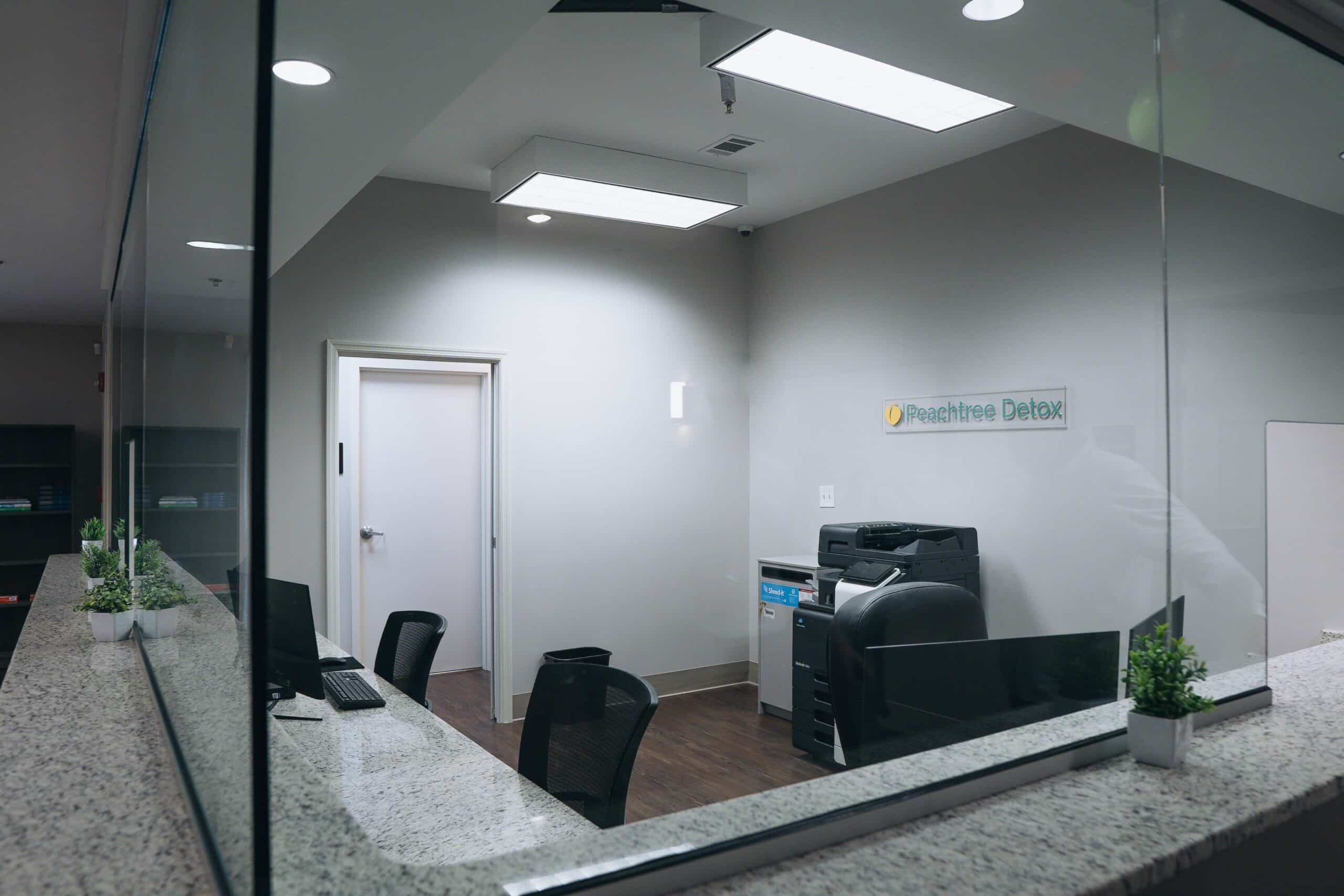
Getting to Fayetteville from Chattanooga, Knoxville, Nashville, and Memphis
The practical questions are fair ones, and you are allowed to ask all of them before anybody puts a bag in a car.
Almost every route out of Tennessee funnels through Chattanooga, where I-24 crosses I-75 and I-59 comes up out of Alabama to meet them. From there it is I-75 south through Dalton and Calhoun, around the east side of the perimeter, then down to Fayetteville. If you’re coming from Chattanooga, plan on about two and a half hours. From Knoxville, roughly four, straight down I-75. From Nashville it runs about four and a half by way of I-24. Also, coming from Memphis it is closer to six and a half, which is why West Tennessee families more often look at a plane.
The flight is the part most people do not think of, and it is a real advantage of sitting where we sit. Hartsfield-Jackson Atlanta International Airport is on the south side of the metro, the same side we are. A flight out of Nashville or Memphis lands in a little over an hour, and from the terminal it is roughly 30 minutes south to our door on GA-54, without crossing the Connector or the north-side traffic that eats an afternoon. Fayetteville itself is a quiet county seat: Piedmont Fayette Hospital is minutes away, Peachtree City and Tyrone are next door, and our program sits among the medical detox options across the Atlanta metro without the downtown noise.
What Medically Supervised Detox Actually Involves
Ask ten people what detox looks like and nine will describe a bathroom floor. That picture is why so many people put it off, and it is a picture of doing it alone, which is a different thing entirely.
Supervised withdrawal management is a recognized level of care in the ASAM Criteria, the framework clinicians use to match a person to the right intensity of treatment. In practice it means a physician-led medical team builds the plan, nurses are on the unit through the night, and symptoms get treated as they appear rather than after they get out of hand.
That matters most for the withdrawals people assume they can tough out. Stopping heavy drinking suddenly can bring seizures and can escalate into delirium tremens, a stage where the body’s automatic controls for heart rate, blood pressure, and temperature stop regulating themselves, which can be fatal without treatment. Our medical alcohol detox exists for that specific risk, and the hour-by-hour shape of alcohol withdrawal is why the first 72 hours belong somewhere with clinical eyes on them. Peachtree Detox & Residential provides supervised detox for:
- Alcohol: the withdrawal most often underestimated at home, where medication lowers seizure risk rather than just easing discomfort.
- Opioids, including fentanyl and heroin: rarely fatal on its own, but miserable enough to send people back to a dose their body can no longer handle.
- Benzodiazepines: Xanax, Klonopin, and Ativan, tapered down slowly under supervision because an abrupt stop carries real seizure risk.
- Stimulants: cocaine and methamphetamine, where the crash lands in mood and sleep more than in the body, and still needs people around who understand it.
- More than one substance at once: the ordinary real-world picture, and the one that most needs a medical team watching how the pieces interact.
For opioid use disorder, medication-assisted treatment changes the arithmetic of those first days. Buprenorphine, sold as Suboxone and as the monthly Sublocade injection, settles onto the same receptors opioids attach to without producing the same high, which flattens cravings and withdrawal together. Naltrexone, including the monthly Vivitrol shot, works the other way and blocks those receptors so opioids have nowhere to land. SAMHSA lists both among the FDA-approved medications for opioid use disorder and notes they work best for people who are also in a treatment program, which is much of the argument for staying past detox. Our medical team decides with each person which one, if any, fits.
The Residential Stay, and the Road Back to Tennessee
Here is the part families are rarely told before they start: getting the substance out of someone’s body is the fastest part of this, and by itself it does very little. A person can finish withdrawal in a week and be back in crisis by the end of the month, because the body cleared and nothing else did. NIDA puts it plainly: detoxification is not the same as treatment and is not enough on its own, and without treatment afterward, drug use generally starts again.
Residential care is where the rest gets addressed. Detox flows straight into an onsite residential program, so the same team that carried someone through the worst nights keeps working with them as the fog lifts. Treatment includes weekly individual therapy with a master’s-level therapist, cognitive behavioral therapy, dialectical behavior therapy, trauma-informed care, holistic therapy, and trauma-informed yoga. For the many people whose substance use sits on top of depression, anxiety, or trauma, co-occurring disorder treatment works on both at once, because treating one and ignoring the other is how people end up back where they started.
Staying connected when home is four hours away
The distance is usually hardest on the person who is not admitted. A mother in Knoxville wants to know whether she will hear her son’s voice, and when. Peachtree Detox & Residential has a nightly phone policy, among the most open in residential care, so contact with family is a daily part of the stay rather than a privilege earned in week three. Onsite AA and NA meetings and SMART Recovery groups run during treatment, so a person starts building the routine they will carry home before they leave the building.
What the handoff back to Tennessee looks like
Going home should be a step down, not a cliff. Before discharge, the team builds an aftercare plan pointed at real resources near where a person actually lives, whether that is Hamilton County, Davidson County, or the Tri-Cities. Tennessee’s own Division of Substance Abuse Services runs a statewide continuum of treatment, recovery, and peer support, and its peer recovery programs connect people to others further along the same road. The Tennessee REDLINE offers free, confidential treatment referrals at 800-889-9789, and anyone in a mental health crisis can call or text 988.
Insurance, Tricare East, and Tennessee’s Military Families
Tennessee and Georgia both sit inside the Tricare East region, and Peachtree Detox & Residential is in-network with Tricare East Select and Prime. For families connected to Fort Campbell up on the Kentucky line or Arnold Air Force Base in Tullahoma, that can make a south metro Atlanta detox one of the more workable in-network options at this level of care once travel is on the table.
If you carry something else, that is worth a conversation rather than a guess. Detox and residential coverage varies more than almost any other benefit, and the answer often turns on details buried in a plan document nobody reads until they need it. Our admissions team will run a confidential benefits check and tell you in plain terms what your plan does and does not pay for, before anyone commits to a trip. Self-pay arrangements exist as well, and the team will lay those numbers out up front rather than after the fact.
Start Detox From Anywhere in Tennessee
Whether the person who needs to stop is you, or you are the one who has been holding a household together while waiting for them to be ready, the next move is the same short conversation. Our admissions team will listen to what is actually happening, check your coverage, and walk through what the trip down and the first day here look like, with nobody pushing you to decide on the call. Nobody needs the whole plan worked out first. Bring the questions you have and you will get straight answers, and if the honest answer today is not yet, that is a real answer too. The road south is not going anywhere.
FAQs About Detox and Residential Rehab Serving Tennessee
No. Peachtree Detox & Residential operates one program, at 1008 GA-54 in Fayetteville, Georgia, on the south side of the Atlanta metro. Tennessee residents are served by traveling here, most often down I-75 through Chattanooga or by flying into Hartsfield-Jackson, which sits about 30 minutes north of us.
From Chattanooga, plan on about two and a half hours. From Knoxville, roughly four hours straight down I-75. From Nashville, about four and a half by way of I-24 and Chattanooga. From Memphis it is closer to six and a half, so many West Tennessee families fly instead. A flight into Hartsfield-Jackson runs a little over an hour, and Fayetteville is about 30 minutes south of the terminal.
Yes. Peachtree Detox & Residential has a nightly phone policy, among the most open in residential care, so daily contact with family is built into the stay rather than earned later. That matters when home is several hours away and the people waiting there need to hear a voice. Our team can also talk through what family involvement looks like before an admission.
Tennessee and Georgia are both in the Tricare East region, and Peachtree Detox & Residential is in-network with Tricare East Select and Prime, which helps military families connected to Fort Campbell and Arnold Air Force Base. If you carry a different plan, our admissions team will run a confidential benefits check and tell you plainly what is and is not covered before you make the trip. Self-pay options are available as well.
Sources
- Tennessee Department of Mental Health and Substance Abuse Services. (n.d.). Fentanyl information and resources. Retrieved from: https://www.tn.gov/behavioral-health/substance-abuse-services/prevention/fentanyl.html. Accessed on August 27, 2026.
- Tennessee Department of Mental Health and Substance Abuse Services. (n.d.). Substance abuse services. Retrieved from: https://www.tn.gov/behavioral-health/substance-abuse-services. Accessed on August 27, 2026.
- American Society of Addiction Medicine. (n.d.). The ASAM criteria. Retrieved from: https://www.asam.org/asam-criteria. Accessed on August 27, 2026.
- National Institute on Alcohol Abuse and Alcoholism. (n.d.). Understanding alcohol use disorder. Retrieved from: https://www.niaaa.nih.gov/publications/brochures-and-fact-sheets/understanding-alcohol-use-disorder. Accessed on August 27, 2026.
- National Institute on Drug Abuse. (n.d.). Fentanyl. Retrieved from: https://nida.nih.gov/research-topics/fentanyl. Accessed on August 27, 2026.
- National Institute on Drug Abuse. (n.d.). Treatment and recovery. Retrieved from: https://nida.nih.gov/publications/drugs-brains-behavior-science-addiction/treatment-recovery. Accessed on August 27, 2026.
- Substance Abuse and Mental Health Services Administration. (n.d.). Treatment options for substance use disorder. Retrieved from: https://www.samhsa.gov/substance-use/treatment/options. Accessed on August 27, 2026.