

Clinically reviewed by the Peachtree Detox & Residential clinical team · October 2026
Peachtree Detox & Residential is a medical detox and residential rehab program in Fayetteville, Georgia, about four and a half hours down I-85 from Charlotte. People make that drive when they want detox and treatment in one place, well away from the people and places that have been feeding the problem.
In Charlotte, a workweek can run from a 7 a.m. call in an Uptown tower to a client dinner in South End, with the weekend starting at Lake Norman on Friday afternoon. Plenty of people inside that pace drink every night, or lean on a few lines of cocaine to get through a deal, or keep a pill bottle in the glove box, and from the outside nothing looks wrong. The first person to notice is usually someone at home in Ballantyne or Matthews, lying awake and trying to decide whether to say something. By the time someone starts looking into drug detox in Charlotte, they have usually been right about the problem for a while.
Peachtree Detox & Residential treats adults with substance use disorder at 1008 GA-54 in Fayetteville, on the south side of metro Atlanta. We are not in North Carolina. We are a detox center and addiction treatment program that people from Charlotte and the rest of Mecklenburg County travel to for medically supervised drug detox followed by residential treatment on the same campus. Charlotte is among the North Carolina communities we serve, along with the Triangle and the mountains around Asheville.
Why People Leave Charlotte for Medical Detox
Charlotte, NC has drug rehab programs of its own, and the surrounding counties have detox units too. For many people, the best choice is one twenty minutes up I-77 or out I-485. The families who look further usually want something specific. Some need withdrawal care and a residential stay without a gap between them, so nobody goes home on day five holding nothing but a referral slip. Some carry Tricare. And a lot of them are dealing with a person who is very good at holding it together in public, whose phone, car, and calendar are all built around keeping the use going.
Down in Fayetteville, that setup stops working. The coworker who supplies, the bar on the way home, the liquor store off Providence Road are all out of reach. For the first couple of weeks that matters a great deal, because cravings and withdrawal are strongest exactly when a person has the least energy to fight them. It also gives a spouse or parent in Charlotte a chance to stop managing someone else’s illness and get some sleep.
Charlotte’s Substance Picture, and What the State Numbers Show
North Carolina keeps detailed overdose data, and it is sobering. According to the state Division of Public Health, 8 North Carolinians died of a drug overdose each day in 2024, and an estimated 2,731 people are suspected to have died of an overdose in 2025, a figure that is not yet final. More than 44,500 North Carolinians lost their lives to an overdose between 2000 and 2024.
Two details are worth knowing for any family in Charlotte. The first is that among those who died, one in four also had a mental health condition such as depression, anxiety, or bipolar disorder. The second, from NIDA, is that cocaine is being adulterated with fentanyl, which NIDA calls a major contributor to rising overdose deaths. A person who has only ever used cocaine at parties may have no tolerance to opioids at all, and that is what makes a contaminated batch so dangerous.
Alcohol rarely shows up in those headlines, but it belongs in the same conversation. NIAAA describes alcohol use disorder as a medical condition marked by an impaired ability to stop or control drinking despite the damage it is causing, and it warns that withdrawal after long, heavy drinking can be life-threatening. That is the reason medical alcohol detox exists.
What Happens in Detox and Residential Treatment
Medical detox is a few days of supervised withdrawal in a unit where a physician-led team sets the plan and nurses check vital signs through the night. Symptoms get treated as they come, with medication where it helps. The goal is to get a person physically stable and ready for the work that follows. Peachtree Detox & Residential provides detox for:
- Alcohol: where sudden withdrawal can bring tremors, seizures, and delirium tremens, a medical emergency in which confusion sets in and the body stops regulating heart rate, blood pressure, and temperature on its own.
- Cocaine and other stimulants: the comedown is mostly mood, sleep, and craving, and it can be bleak enough that people use again just to feel normal. Our cocaine detox program keeps people supported through it.
- Opioids and fentanyl: rarely fatal by themselves, but going back to use after tolerance has dropped is when overdoses happen, which is why medication-assisted treatment with Suboxone, Sublocade, Vivitrol, or naltrexone is available when our medical team decides it fits.
- Benzodiazepines: sedatives such as Xanax and Klonopin, which carry seizure risk when stopped suddenly and are tapered down slowly.
- Several substances at once: common in practice, and the clearest reason to detox with a medical team that knows everything in the person’s system.
Residential treatment and co-occurring conditions
After detox, people move into our residential rehab program on the same campus. Each week includes individual therapy with a master’s-level therapist, along with cognitive behavioral therapy, which helps people recognize the thoughts that lead to using, and dialectical behavior therapy, which builds skills for handling stress and strong emotions. Trauma-informed therapy, holistic therapy, and trauma-informed yoga round out the week, and AA, NA, and SMART Recovery meetings are held onsite.
A lot of people who drink or use to keep up with a demanding life are also living with anxiety or depression they have never treated. SAMHSA estimates that about 21.2 million adults in the United States had both a mental illness and a substance use disorder in 2024, which it calls co-occurring disorders. Our dual diagnosis treatment addresses both together.
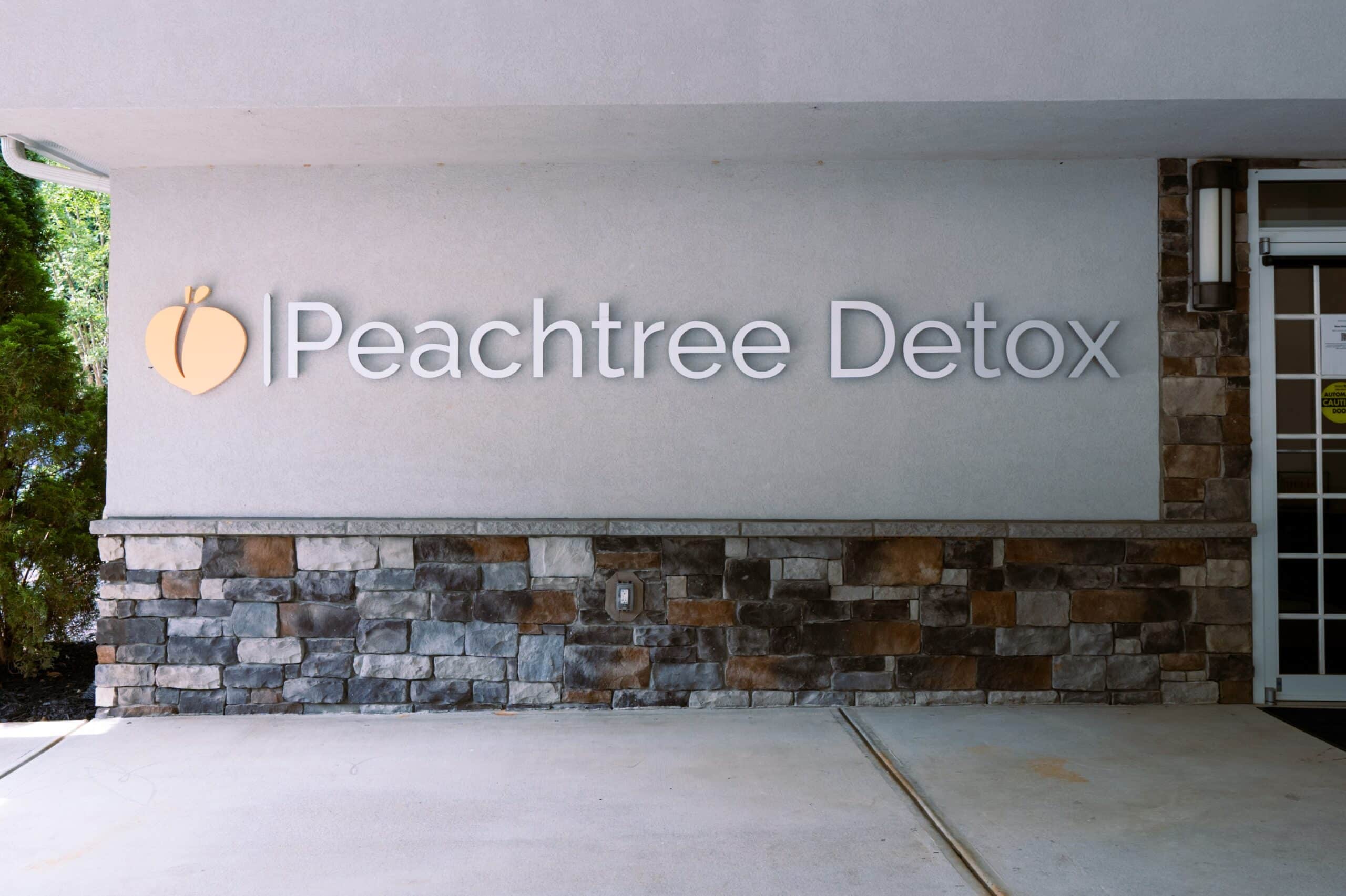
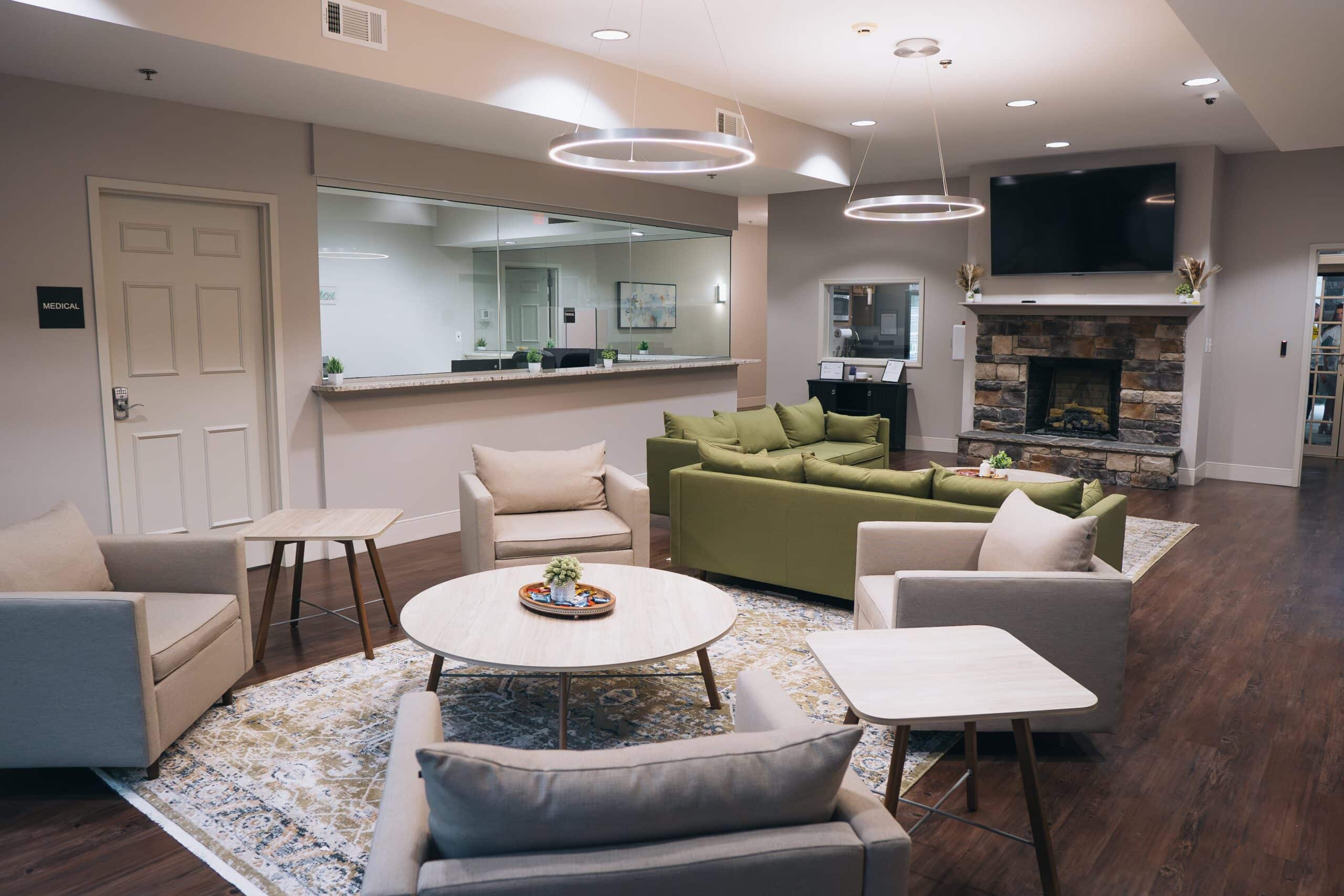
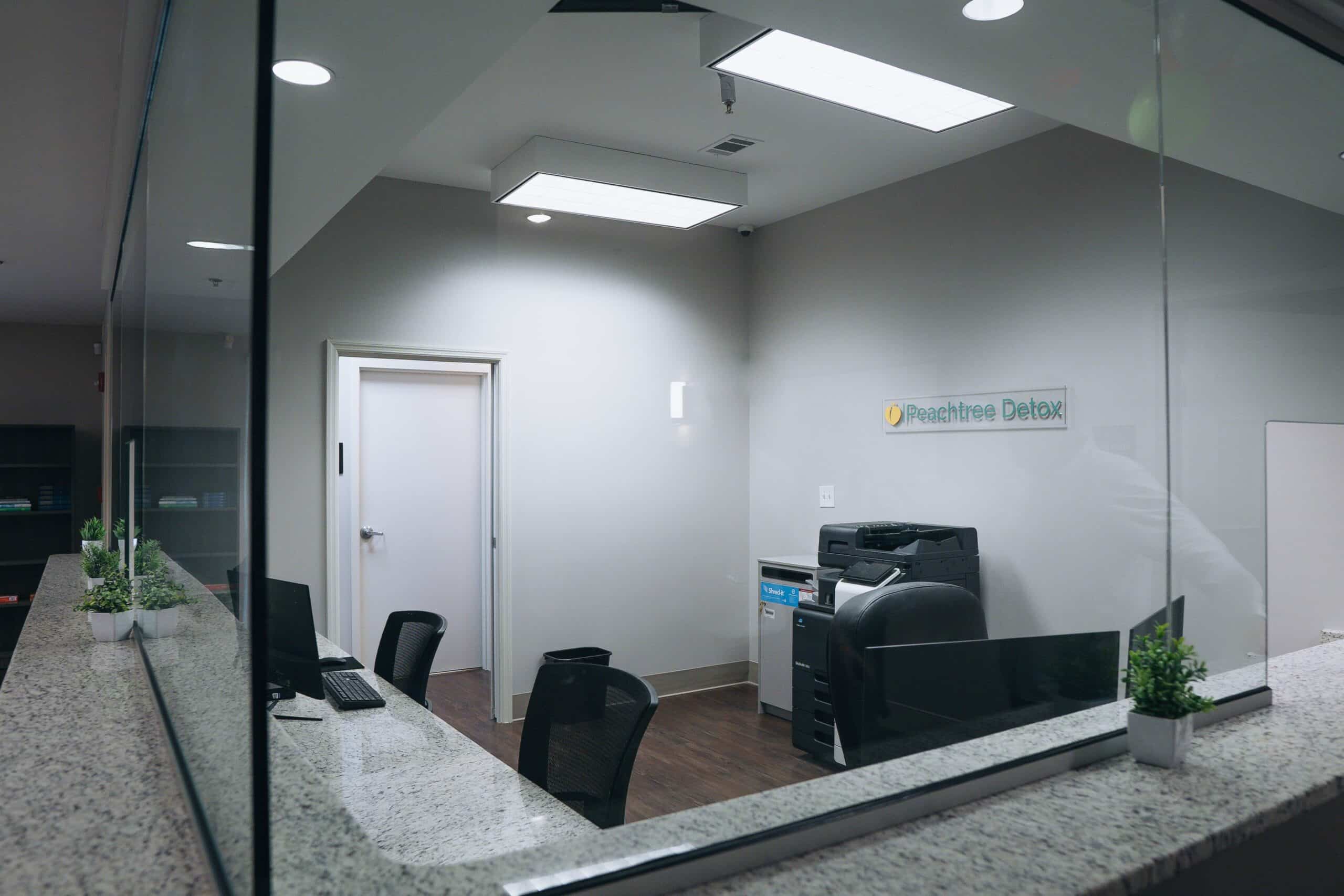
Tour Our Detox in Fayetteville, Georgia

Getting From Charlotte to Fayetteville
From Charlotte, this is close to a single-road trip. Take I-85 south through Gastonia and Kings Mountain into South Carolina, past the peach-shaped water tower in Gaffney, through Spartanburg, Greenville, and Anderson, and across Lake Hartwell into Georgia. Stay on I-85 through Gwinnett County and downtown Atlanta, continue south past Hartsfield-Jackson, and exit for Fayette County and GA-54. Plan on about four and a half hours. The stretch through downtown Atlanta can add a lot of time at rush hour, so a mid-morning or early-afternoon arrival in the metro tends to go smoothest.
Flying from Charlotte Douglas
Many Charlotte families fly instead. Flights from Charlotte Douglas International to Hartsfield-Jackson Atlanta International take a little over an hour, and the airport sits on the south side of the metro, the same side as Fayetteville. From the terminal it is roughly a half-hour drive to campus, with Piedmont Fayette Hospital a few minutes away on GA-54.
Staying in Touch, and the Plan for Coming Home
When home is four and a half hours away, contact matters. Peachtree Detox & Residential has a nightly phone policy, so families in Charlotte hear from their person every evening. Family therapy gives parents, spouses, and adult children a structured place to work through what the last few years have done to everyone.
Before discharge, our team builds an aftercare plan aimed at outpatient care, medication follow-up, and meetings near home. In North Carolina, publicly funded behavioral health care is coordinated county by county through LME-MCOs, the local organizations that manage those services, so that is often part of the handoff. It is also worth having naloxone at home. Under the state’s standing order, naloxone is available without a prescription at most retail pharmacies in North Carolina and is covered by most insurance plans.
Insurance and Cost for Charlotte Residents
Peachtree Detox & Residential accepts many insurance plans, and for military families and retirees around Charlotte, that includes Tricare East Select and Prime. For any other plan, the best first step is a confidential insurance check. Our admissions team will go through your benefits and explain what is covered and what is not, in plain terms. Private-pay arrangements are also available, and the costs are explained before anyone makes the trip.
From Charlotte to Peachtree Detox & Residential
Reaching out does not commit anyone to anything, whether the call comes from the person who has been using or the family member who has finally decided to say something. Start through the admissions page, and our team will listen to what is going on, verify your coverage, and talk through the drive or flight and what the first day looks like. If now is not the moment, that is all right; the conversation will still be here when it is. If someone is in danger right now, call 911, and for a mental health or substance use crisis in North Carolina, call or text 988.
FAQs About Detox and Residential Near Charlotte, NC in Fayetteville, GA
No. Peachtree Detox & Residential has one campus, at 1008 GA-54 in Fayetteville, Georgia, south of Atlanta. Charlotte residents come to us by driving about four and a half hours down I-85 or by flying from Charlotte Douglas into Hartsfield-Jackson, which is roughly a half hour from campus.
Yes. Peachtree Detox & Residential provides medical detox for alcohol, opioids including fentanyl, cocaine and other stimulants, benzodiazepines, and combinations of substances. Alcohol and benzodiazepine withdrawal can cause seizures, so both are managed with medication on a monitored unit. Residential treatment follows on the same campus.
Plan on about four and a half hours by car, almost all of it on I-85 south through Spartanburg, Greenville, and Atlanta. Rush hour in downtown Atlanta can add a good deal of time. A flight from Charlotte Douglas to Hartsfield-Jackson takes a little over an hour, and the campus is about a half hour south of the airport.
Many plans do, but coverage depends on the details of your policy. Our admissions team will run a confidential benefits check and tell you plainly what your policy covers before you travel. Private-pay options are also available.
Sources
- National Institute on Alcohol Abuse and Alcoholism. (n.d.). Understanding alcohol use disorder. Retrieved from: https://www.niaaa.nih.gov/publications/brochures-and-fact-sheets/understanding-alcohol-use-disorder. Accessed on October 27, 2026.
- National Institute on Drug Abuse. (n.d.). Cocaine. Retrieved from: https://nida.nih.gov/research-topics/cocaine. Accessed on October 27, 2026.
- North Carolina Department of Health and Human Services, Division of Public Health. (n.d.). North Carolina overdose epidemic data. Retrieved from: https://www.dph.ncdhhs.gov/programs-services/chronic-disease-and-injury/injury-and-violence-prevention-branch/north-carolina-overdose-epidemic-data. Accessed on October 27, 2026.
- North Carolina Department of Health and Human Services. (n.d.). Overdose epidemic: Syringe and naloxone access. Retrieved from: https://www.ncdhhs.gov/about/department-initiatives/overdose-epidemic/syringe-and-naloxone-access. Accessed on October 27, 2026.
- North Carolina Department of Health and Human Services. (n.d.). Overdose epidemic: Treatment. Retrieved from: https://www.ncdhhs.gov/about/department-initiatives/overdose-epidemic/treatment. Accessed on October 27, 2026.
- Substance Abuse and Mental Health Services Administration. (n.d.). Co-occurring disorders and other health conditions. Retrieved from: https://www.samhsa.gov/substance-use/treatment/co-occurring-disorders. Accessed on October 27, 2026.