

Clinically reviewed by the Peachtree Detox & Residential clinical team · October 2026
Peachtree Detox & Residential is in Fayetteville, Georgia, about two and a half to three hours east of Birmingham on I-20. For some Jefferson County families, being a few hours from home makes the first week of treatment easier to get through.
It is a weeknight in Hoover. The prescription bottle in the kitchen drawer was supposed to last a month and is empty in eleven days, and the person it belongs to has started calling in sick on Mondays. Across town in Bessemer, a man who has never missed a shift at the plant is drinking in the truck before he walks in the door. In Trussville, a mother is looking up drug rehab in Birmingham and wondering how to bring it up at home. If any of that is close to your house, the worry you are carrying is a reasonable response to what you are seeing.
Peachtree Detox & Residential is a detox center and residential treatment program for substance use disorder at 1008 GA-54 in Fayetteville, on the south side of metro Atlanta. We have no Alabama location. What we offer people from Birmingham is medically supervised drug and alcohol detox followed by a residential stay on the same campus, a few hours from home and out of reach of the usual phone numbers. Birmingham is one of several cities among the Alabama communities we serve, along with Anniston and Oxford further east on the same interstate.
Begin Fayetteville Drug and Alcohol Detox Today
Peachtree Detox & Residential is a premier provider of addiction treatment services and detox programs in Georgia. If you or someone you love is in need of professional care, reach out to us now.
Why Some Birmingham Families Look East for Rehab
Birmingham has addiction treatment options of its own, and for many people the right program is one they can reach on US-280 or I-65 in twenty minutes. The people who end up driving east usually have a narrower reason. Some need medical detox and a residential bed in one place, without a gap between them. Some carry Tricare and want a program that is in-network for it. And some have tried to stop at home in Homewood or Center Point two or three times already, and every attempt ended at the same friend’s house or the same pharmacy counter.
Distance changes that last part. A person going through drug detox three hours from their usual supplier cannot drive over in a bad moment, and a family member who has spent months standing guard gets a few weeks to sleep. Leaving town can feel like running away. In practice it removes the easiest exits during the stretch when cravings and withdrawal are strongest, and it lets everyone in the house stop bracing for a while.
It also matters what is waiting at the other end. Our residential rehab program runs on the same campus as detox, so nobody finishes withdrawal on a Friday and gets handed a list of phone numbers. The same team keeps working with them as their head clears.
What Alabama’s Drug Picture Means for the Person You Are Worried About
The substances behind most calls from Birmingham match what the state itself reports. The Alabama Department of Mental Health describes methamphetamine and fentanyl as virtually tied as the primary drug threats in the state, with law enforcement ranking fentanyl and other opioids as the most dangerous. The same department notes that fentanyl is increasingly mixed with other drugs such as methamphetamine, which means a person who thinks of themselves as using only a stimulant may be taking an opioid too.
Prescription opioids have their own history here. Alabama led the nation in 2012 with 143.8 opioid prescriptions per 100 people. By 2023 that rate had dropped by half, to 71.4 per 100 residents, yet ADMH reports the state’s dispensing rate is still twice the national average and second in the country. A lot of the opioid dependence we see from central Alabama started with a legitimate prescription after a back injury, a surgery, or years of physical work.
There is real good news in the data too. ADMH reports a 30 percent decline in substance-related overdose deaths from April 2024 to April 2025, based on provisional CDC figures, the first notable drop since 2017. That decline is worth holding onto. It also means nothing for any one person who is still using, because the drug supply that person buys has not gotten any more predictable.
Tour Our Rehab Programs Near Atlanta, Georgia
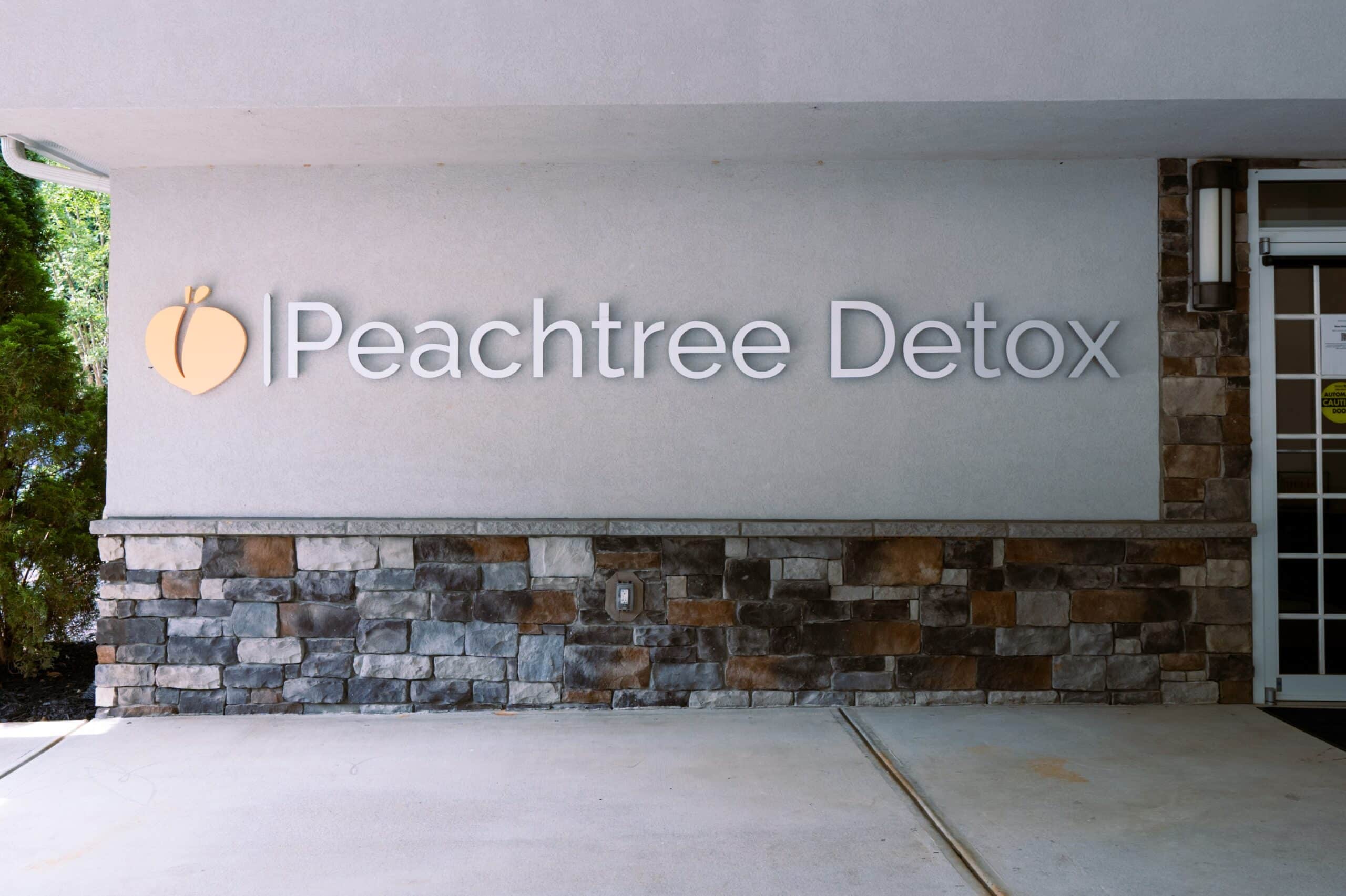
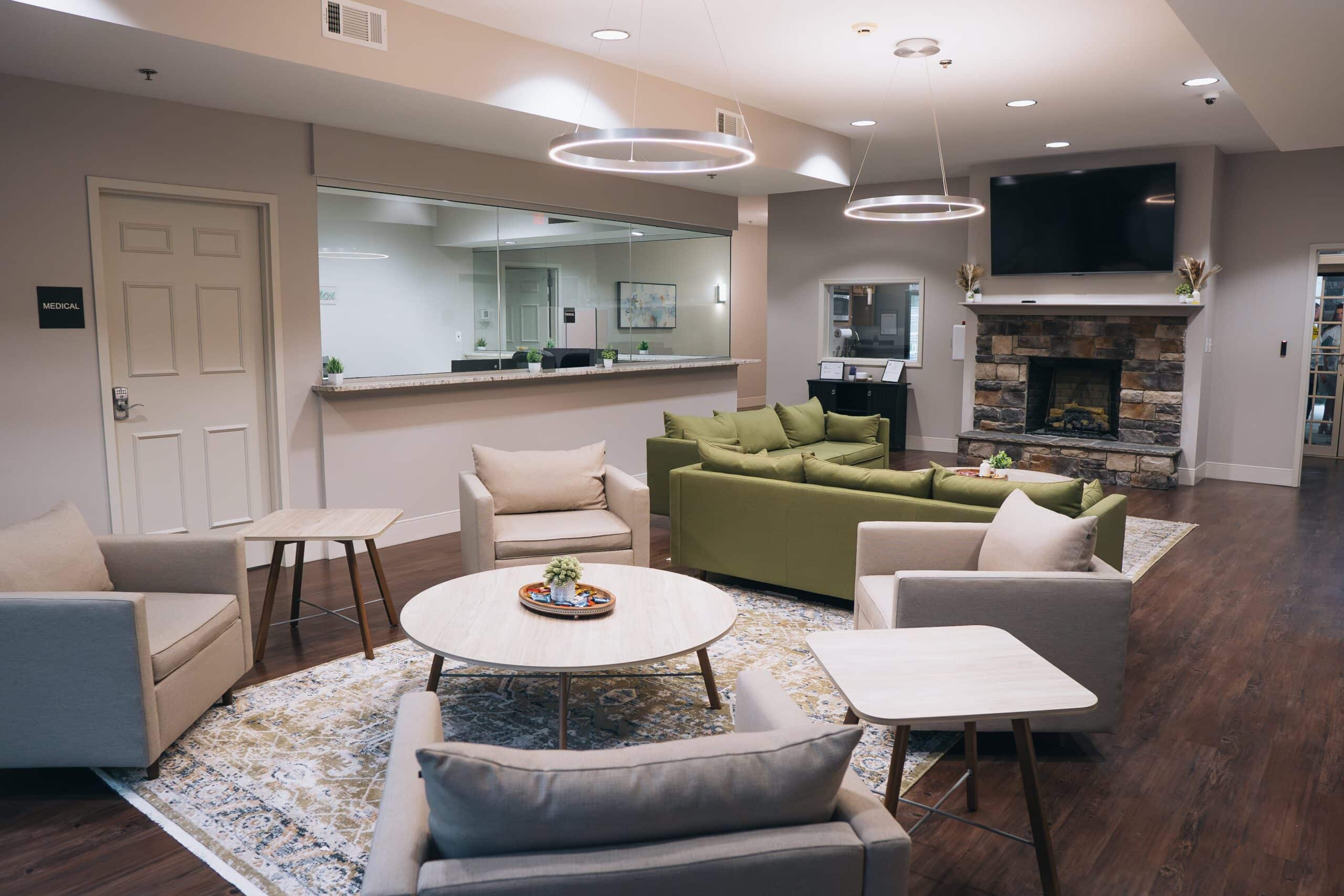

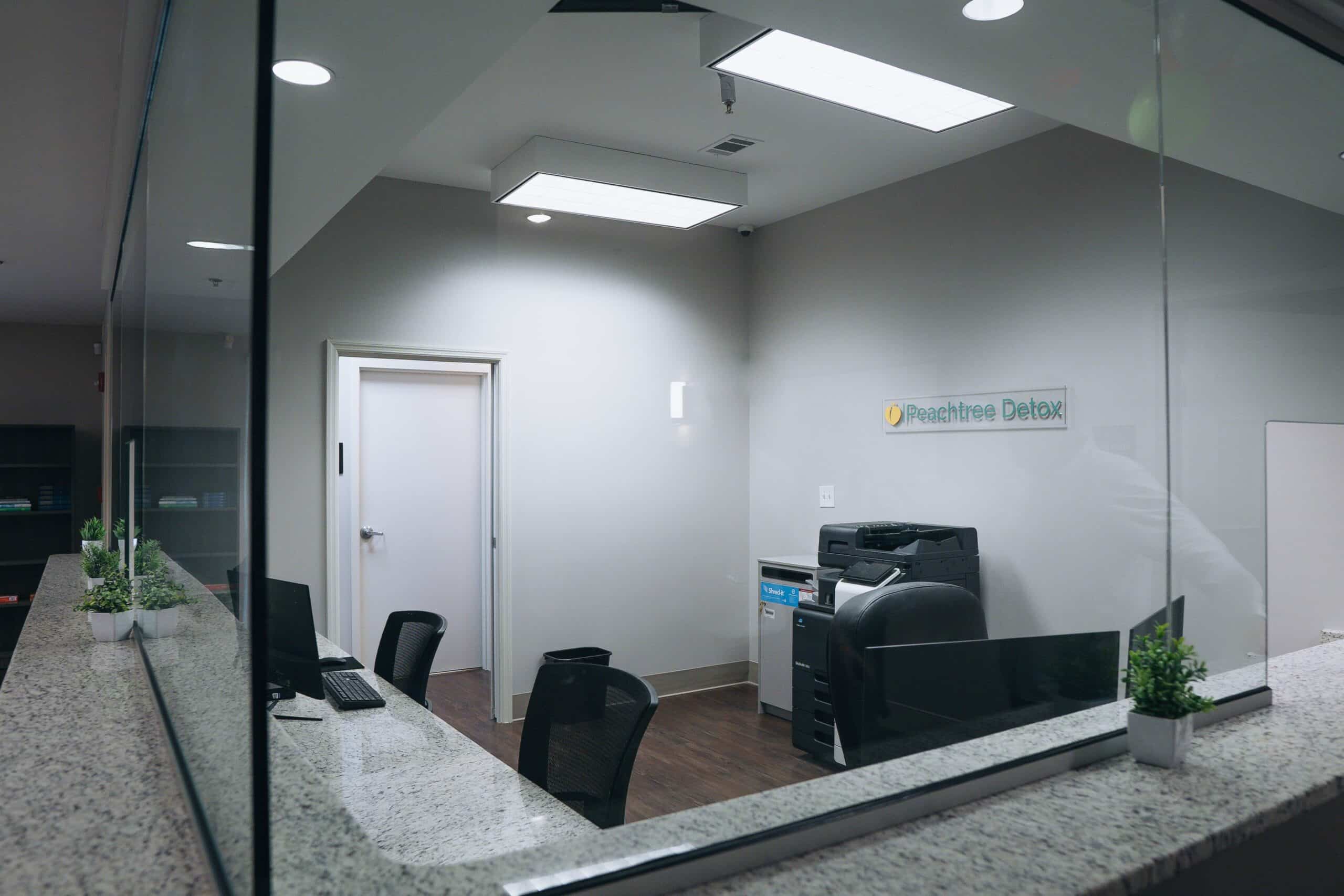
What Detox and Residential Treatment Involve at Peachtree Detox & Residential
Medical detox has three jobs: assess what a person’s body is dealing with, get them physically stable, and move them into ongoing treatment. That last job is the one most home attempts skip. A federal treatment guide from SAMHSA describes detox in exactly those three parts, and it is the framework our physician-led medical team follows. Nurses watch vital signs through the night, which is when withdrawal tends to peak and when a person is least able to describe what they feel.
Withdrawal looks different depending on the substance, and the risks are not equal:
- Alcohol: seizures can begin within hours of the last drink, and a small share of people progress to delirium tremens, a medical emergency in which confusion sets in and heart rate, blood pressure, and temperature stop regulating themselves. Our alcohol detox program treats this with medication on a monitored unit.
- Prescription opioids, heroin, and fentanyl: rarely fatal by themselves, but miserable enough that people often go back to using within days, after their tolerance has dropped. That is the point where overdose risk climbs.
- Methamphetamine and cocaine: withdrawal shows up as depression, anxiety, irritability, sleep problems, trouble concentrating, and strong cravings, and NIDA notes the low mood and cravings can linger for months. Methamphetamine is also present in many overdose deaths involving fentanyl. Our meth detox program is built for that stretch.
- Benzodiazepines: drugs such as Xanax and Klonopin, which, like alcohol, can cause seizures if stopped suddenly and are tapered down slowly under supervision.
- More than one substance: the most common picture we see, and the reason a medical team needs to know everything that has been in a person’s system.
For opioid use disorder, medication-assisted treatment can take much of the edge off. Peachtree Detox & Residential offers Suboxone and Sublocade, both forms of buprenorphine, a medication that settles cravings and withdrawal without producing the same high, along with Vivitrol and oral naltrexone, which block opioids from having an effect. SAMHSA lists these as FDA-approved options that work best alongside counseling and a treatment program. Which one fits, if any, is a decision our medical team makes with each person.
What a Residential Day Includes
Once withdrawal settles, treatment moves to the reasons behind the use. Each person has weekly individual therapy with a master’s-level therapist. Groups draw on cognitive behavioral therapy, which helps people catch the thoughts that lead to using, and dialectical behavior therapy, which teaches skills for riding out intense emotions without acting on them. Trauma-informed care, holistic therapy, and trauma-informed yoga are part of the schedule, and AA, NA, and SMART Recovery meetings run onsite so the habit of going to a meeting starts before the drive home.
The Drive From Birmingham to Fayetteville
Most families drive, and the route is simple. From downtown Birmingham, take I-20 east past Leeds, Pell City, Anniston, and Heflin, and cross into Georgia near Tallapoosa. Stay on I-20 into the Atlanta area, then work around the south side of the I-285 perimeter and down into Fayette County to GA-54. Plan on two and a half to three hours, more if you hit Atlanta traffic in the late afternoon.
Remember the time difference: Alabama runs on Central time and Georgia on Eastern. Leave Birmingham at 10 in the morning and it is past 1 in the afternoon on the clock when you pull in, so build that hour into admission plans.
Flying in from BHM
Some families, especially those coordinating from out of state on a loved one’s behalf, prefer to fly. Flights from Birmingham-Shuttlesworth International land at Hartsfield-Jackson Atlanta International Airport, which sits on the south side of the metro, the same side as Fayetteville. From the terminal it is roughly a half-hour drive south to our door. Piedmont Fayette Hospital is a few minutes up GA-54 from campus, and Peachtree City and Tyrone are next door.
Coming Home to Birmingham
A residential stay should end with a plan that still works once the person is back in Birmingham. Before discharge, our team builds an aftercare plan aimed at real resources near where the person lives, whether that is outpatient therapy in Jefferson County, a doctor who will continue medication-assisted treatment, or a meeting schedule in Homewood or Hoover.
Family is built into that plan. Peachtree Detox & Residential offers family therapy, and our nightly phone policy means a parent or spouse in Birmingham hears from their person every evening instead of waiting weeks for a first call. If anyone in the household is in crisis while their person is away, 988 is answered in Alabama, and one of the state’s four 988 call centers is in Birmingham, run by JBS in collaboration with the Crisis Center Birmingham.
Insurance and Cost for Birmingham Residents
Peachtree Detox & Residential accepts many insurance plans, and for military families and retirees in central Alabama, that includes Tricare East Select and Prime.
For other plans, the answer depends on the details of your policy, so it is worth a confidential insurance check before anyone packs a bag. Our admissions team will look at your benefits and tell you plainly what is and is not covered. Private-pay arrangements are also available, and the team will explain the costs up front so there are no surprises after the stay.
From Birmingham to Peachtree Detox & Residential
If the attempts to quit at home have stopped adding up, a short conversation with our team is the next step, and a worried family member can make that call as easily as the person using. Reach our team through the admissions page, and we will listen to what is going on, check your coverage, and walk you through the drive and the first day. Nobody has to decide anything on that call. If the timing is not right yet, keep this page, and we will be glad to talk when it is. If someone is in danger right now, call 911, and for a mental health or substance use crisis anywhere in Alabama, call or text 988.
FAQs About Detox and Residential Near Birmingham at Peachtree Detox & Residential
Peachtree Detox & Residential has one campus, at 1008 GA-54 in Fayetteville, Georgia, on the south side of metro Atlanta. People from Birmingham and the rest of Jefferson County travel to us, usually by driving east on I-20 or by flying from Birmingham-Shuttlesworth into Hartsfield-Jackson. Our admissions team can talk through which option makes sense for your family.
Plan on two and a half to three hours by car, most of it on I-20 east, then around the south side of Atlanta to GA-54. Alabama is on Central time and Georgia is on Eastern, so the clock jumps forward an hour at the state line. From Hartsfield-Jackson, the campus is roughly a half-hour drive south.
Both. Medical detox and residential treatment for substance use disorder happen on the same campus, so a person moves from withdrawal care into therapy without a gap or a second admission. Residential care includes weekly individual therapy, CBT, DBT, trauma-informed care, family therapy, and onsite AA, NA, and SMART Recovery meetings, followed by an aftercare plan for the return to Birmingham.
Many plans do, but coverage depends on the details of your policy. Our admissions team will run a confidential benefits check and tell you plainly what your policy covers before you make the trip. Private-pay options are available as well.
Sources
- Alabama Department of Mental Health. (n.d.). Understanding the opioid crisis. Retrieved from: https://mh.alabama.gov/understanding-the-opioid-crisis/. Accessed on October 23, 2026.
- Alabama Department of Mental Health. (n.d.). 988 Suicide and Crisis Lifeline in Alabama. Retrieved from: https://mh.alabama.gov/988/. Accessed on October 23, 2026.
- Center for Substance Abuse Treatment. (2006). Detoxification and substance abuse treatment (Treatment Improvement Protocol Series, No. 45). Retrieved from: https://www.ncbi.nlm.nih.gov/books/NBK64119/. Accessed on October 23, 2026.
- Canver, B. R., Newman, R. K., & Gomez, A. E. (2024). Alcohol withdrawal syndrome. StatPearls. Retrieved from: https://www.ncbi.nlm.nih.gov/books/NBK441882/. Accessed on October 23, 2026.
- National Institute on Drug Abuse. (n.d.). Methamphetamine. Retrieved from: https://nida.nih.gov/research-topics/methamphetamine. Accessed on October 23, 2026.
- Substance Abuse and Mental Health Services Administration. (n.d.). Treatment options for substance use disorder. Retrieved from: https://www.samhsa.gov/substance-use/treatment/options. Accessed on October 23, 2026.