
It is sold next to energy shots and herbal teas, with no prescription and no warning. But kratom acts on the same receptors in the brain that morphine does, which is exactly why it can be so hard to stop.
Clinically reviewed by the Peachtree Detox & Residential clinical team · June 2026
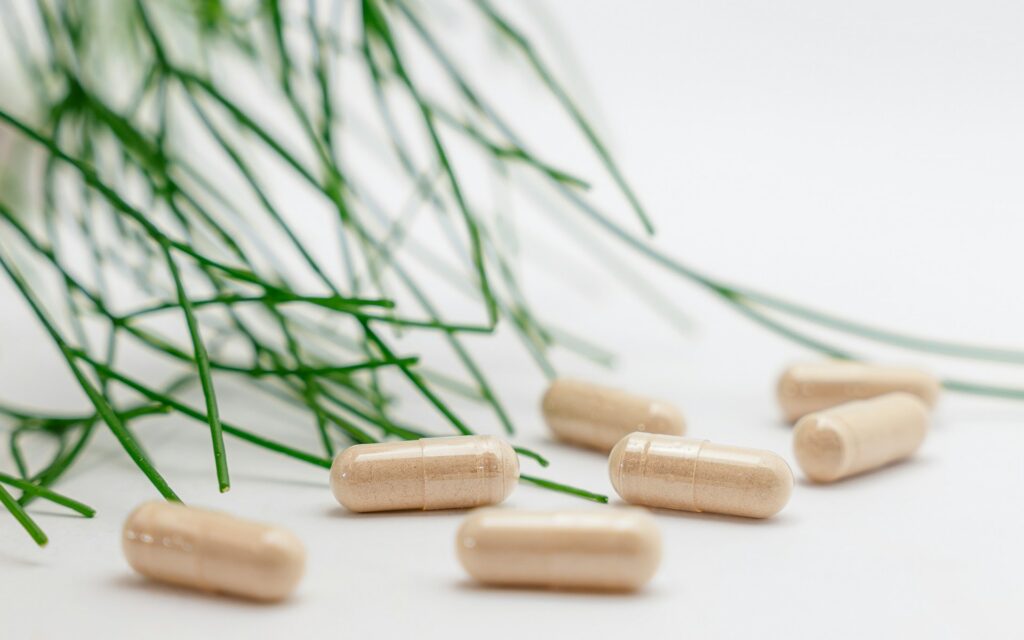
You can buy it at a gas station on GA-54 in Fayetteville, at a smoke shop near the Pavilion in Peachtree City, or online with two-day shipping. It comes in green powder, in capsules, in little bottles of liquid extract, and in tea. The packaging often calls it a botanical or an herbal supplement, and that word, herbal, is doing a lot of quiet work. It makes the product sound closer to chamomile than to anything you would need a doctor for.
The honest picture is more complicated. Kratom does come from a plant, but its active ingredients land on the same spot in the brain as prescription opioids, and that is why some people who started using it for energy or for pain end up unable to stop without getting sick. Whether you are the one taking it or the one watching someone you love reach for it more and more often, the question underneath the search is usually the same: is this actually dangerous, and what do we do now? Peachtree Detox & Residential runs a medically supervised kratom detox program for South Metro Atlanta, and the answer starts with understanding what this plant really does inside the body.
Where Kratom Comes From and What Is Inside It
Kratom is made from the leaves of Mitragyna speciosa, a tree native to Southeast Asia and related to the coffee plant. For generations, laborers in that part of the world chewed the fresh leaves or brewed them into tea to push through long days. What reaches a shelf in Fayette County is usually the dried leaf ground into powder, then pressed into capsules, steeped as tea, or boiled down into a concentrated liquid extract.
The reason kratom does anything at all comes down to two compounds in the leaf: mitragynine and 7-hydroxymitragynine. According to the National Institute on Drug Abuse, both of these activate the brain’s mu-opioid receptors, the same docking points that morphine, oxycodone, and fentanyl plug into. Think of those receptors as locks on the surface of brain cells; opioids are keys that fit them, and so, it turns out, are the compounds in kratom. That single fact is why a product marketed as an herbal pick-me-up can produce effects, and risks, that look a lot like a mild opioid.
Kratom is unusual because it does not behave like just one drug. At a low dose, it tends to act like a stimulant, closer to a strong cup of coffee, bringing a burst of energy, alertness, talkativeness, and a faster heart rate. At a higher dose, it tips the other direction and behaves more like an opioid, bringing relaxation, pain relief, drowsiness, and sometimes confusion. The same bag of powder can do two very different things depending on how much someone takes, which makes the effects unpredictable and the line into trouble easy to cross without noticing.
Why “Herbal” Does Not Mean “Safe”
A plant origin feels reassuring. Poison ivy is also a plant, and so is tobacco. Natural and safe are not the same thing, and with kratom the gap between the two is where people get hurt. The U.S. Food and Drug Administration has not approved kratom for any medical use and warns against using it, pointing to real risks that include liver injury, seizures, and the development of a substance use disorder. Because the compounds in kratom act on the same opioid receptors as morphine, the FDA notes it carries genuine risks of addiction, abuse, and dependence.
There is a second problem that has nothing to do with the plant itself and everything to do with how it is sold. Kratom products in the United States are not regulated the way a medication is, so what is printed on the label may not match what is in the package. Testing has found some kratom products contaminated with heavy metals or with bacteria such as salmonella, and others spiked with compounds that were never disclosed on the label. That means two bottles that look identical on the same shelf near Jonesboro can hit very differently, and a person has no reliable way to know the dose or the purity of what they are taking.
The Reasons People Reach for It, Honestly Stated
People do not start using kratom to harm themselves. They start because it seems to solve a real problem, and for a while it may seem to. Understanding the actual reasons is part of understanding the risk.
- For pain: Because kratom acts on opioid receptors, many people use it to manage chronic pain, sometimes after losing access to a prescription. The relief is real, and so is the receptor activity behind it.
- For anxiety or low energy: Lower doses can feel stimulating and mood-lifting, which is why some people lean on it to get through a shift or quiet a racing mind.
- To self-manage opioid withdrawal: This is one of the most common and most painful reasons. People trying to get off heroin or pain pills on their own use kratom to blunt the withdrawal, not realizing they are often trading one opioid-like dependence for another.
None of those reasons are foolish. They are the reasons a person in pain or in withdrawal does the most logical thing in front of them. The trouble is that the same receptor activity that brings the relief also builds the dependence, and over weeks and months the body adapts and asks for more.
How Dependence Builds, and What Withdrawal Feels Like
When any opioid-like substance reaches the brain’s receptors over and over, the brain adjusts. It dials down its own signaling to keep things balanced, so the original dose stops feeling like enough and a person needs more to get the same effect. That is tolerance. Once the brain has rebalanced itself around the daily presence of kratom, taking it away leaves the system thrown off, and that is when withdrawal starts. This is a physical process, not a matter of willpower, and naming it that way matters for anyone blaming themselves or blaming someone they love.
Kratom withdrawal is opioid-like, and NIDA describes it as generally mild to moderate for most people. Mild to moderate is not the same as nothing. People going through it commonly report anxiety, irritability, muscle aches, sweating, trouble sleeping, runny nose, stomach upset, and strong cravings. For someone who has been using heavily or for a long time, those symptoms can be intense enough to send them straight back to the powder just to feel normal again, which is part of how the cycle holds. They tend to follow a predictable hour-by-hour arc, building in the first day after the last dose and easing over the days that follow.
There is one symptom that deserves its own sentence. Seizures have been reported in some cases of kratom use and withdrawal, and a seizure is a medical emergency, not something to ride out alone in a back bedroom in Tyrone or Newnan. The risk goes up when kratom is mixed with other substances or used in very high amounts. The danger is real enough that kratom withdrawal can trigger seizures that need fast treatment, which is exactly why stopping under medical eyes is safer than stopping cold at home.
The Newer, Sharper Danger: Concentrated 7-OH Products
For a long time the conversation about kratom was a conversation about leaf and powder. That is changing, and not for the better. The compound 7-hydroxymitragynine, the more potent of the two active ingredients, is now being concentrated and sold on its own in products often labeled 7-OH. These are a different animal from traditional kratom tea.
Here is why the distinction matters for safety. In laboratory settings, mitragynine causes only minimal slowing of breathing, while 7-hydroxymitragynine can cause real respiratory depression, meaning it can slow breathing down the way a classic opioid does. Breathing is the part of an opioid overdose that turns deadly. So a concentrated 7-OH product strips away much of what made traditional leaf comparatively milder and amplifies the most dangerous property. The FDA has flagged these concentrated 7-OH products as an emerging threat and has taken steps to restrict them. If the powder on the counter has shifted to a small bottle of high-potency extract, the risk profile has shifted with it.
What Medically Supervised Detox From Kratom Looks Like
If you have been quietly afraid that stopping could go badly, that fear is reasonable, and it is also solvable. The point of a medical detox is to take the parts of withdrawal that are dangerous or unbearable and manage them in a setting built for exactly that. A medically supervised detox is the first step of stabilizing the body so that the real work of recovery has a foundation to stand on.
At Peachtree Detox & Residential in Fayetteville, kratom withdrawal is managed with around-the-clock nursing on the unit, which means the symptoms that scare people most, the seizures, the relentless cravings, the sleepless nights, are watched and treated as they happen rather than endured alone. Because kratom acts on opioid receptors, certain cases may be appropriate for medication-assisted treatment, where an FDA-approved medication is used to ease withdrawal and steady cravings. Whether any medication fits is a clinical decision made for the individual, not a one-size answer, and it is made by the medical team after an assessment.
Detox is the beginning, not the whole of it. Clearing kratom from the body settles the physical dependence, but the reasons a person reached for it, the pain, the anxiety, the earlier opioid use, are still there and still need care. That is why detox flows into ongoing kratom addiction treatment, which matters as much as the first few days. For neighbors closer to home, Peachtree Detox & Residential also serves as a drug and alcohol rehab in Fayetteville for the surrounding Fayette, Coweta, and Clayton county communities.
From a Gas-Station Shelf to a Safe First Step in Fayetteville
If kratom has quietly become something the day is built around, for you or for someone you are trying to reach, that is not a moral failure and it is not a problem you have to untangle by yourself. The first call is a conversation, not a commitment; the team will listen, answer what stopping actually involves, and verify what your plan covers through the Peachtree Detox & Residential admissions team, and you can start a benefits check anytime through insurance verification. South Metro Atlanta has a real medical resource less than half an hour from Piedmont Fayette Hospital, just off GA-54. When you are ready to take that first step, we are here to help you take it safely.
Frequently Asked Questions About What Kratom Is
Kratom is not chemically an opioid, but it acts like one in the brain. Its two main compounds, mitragynine and 7-hydroxymitragynine, activate the same mu-opioid receptors that morphine and oxycodone do, according to the National Institute on Drug Abuse. That is why kratom can relieve pain, why it can build dependence, and why the FDA warns it carries risks of addiction, abuse, and dependence. If regular use has led to withdrawal when you stop, talking with a medical team about a supervised detox is the safest next step.
Yes. After regular use, the brain adapts to kratom, and stopping can trigger opioid-like withdrawal. NIDA describes it as generally mild to moderate, though that still commonly means anxiety, irritability, muscle aches, sweating, insomnia, and strong cravings, and seizures have been reported in some cases. How long it lasts depends on how much and how long a person used. A medically supervised detox can manage these symptoms so the hardest days are safer and more comfortable than going it alone.
Peachtree Detox & Residential provides medically supervised kratom detox in Fayetteville, just off GA-54 and a short drive from Peachtree City, Newnan, Tyrone, and Jonesboro. Care includes around-the-clock nursing on the unit, and certain cases may be appropriate for medication-assisted treatment. You can reach the admissions team to talk through what detox involves and verify your insurance benefits. For statewide resources beyond treatment, the Georgia Department of Behavioral Health and Developmental Disabilities maintains a public help directory.
Sources
- National Institute on Drug Abuse. (n.d.). Kratom. Retrieved from: https://nida.nih.gov/research-topics/kratom. Accessed on June 22, 2026.
- U.S. Food and Drug Administration. (n.d.). FDA and kratom. Retrieved from: https://www.fda.gov/news-events/public-health-focus/fda-and-kratom. Accessed on June 22, 2026.
- U.S. Food and Drug Administration. (n.d.). Hiding in plain sight: 7-OH products. Retrieved from: https://www.fda.gov/drugs/information-consumers-and-patients-drugs/hiding-plain-sight-7-oh-products. Accessed on June 22, 2026.
- Substance Abuse and Mental Health Services Administration. (n.d.). SAMHSA’s national helpline. Retrieved from: https://www.samhsa.gov/find-help/helplines/national-helpline. Accessed on June 22, 2026.
- Georgia Department of Behavioral Health and Developmental Disabilities. (n.d.). Georgia DBHDD. Retrieved from: https://dbhdd.georgia.gov/. Accessed on June 22, 2026.