
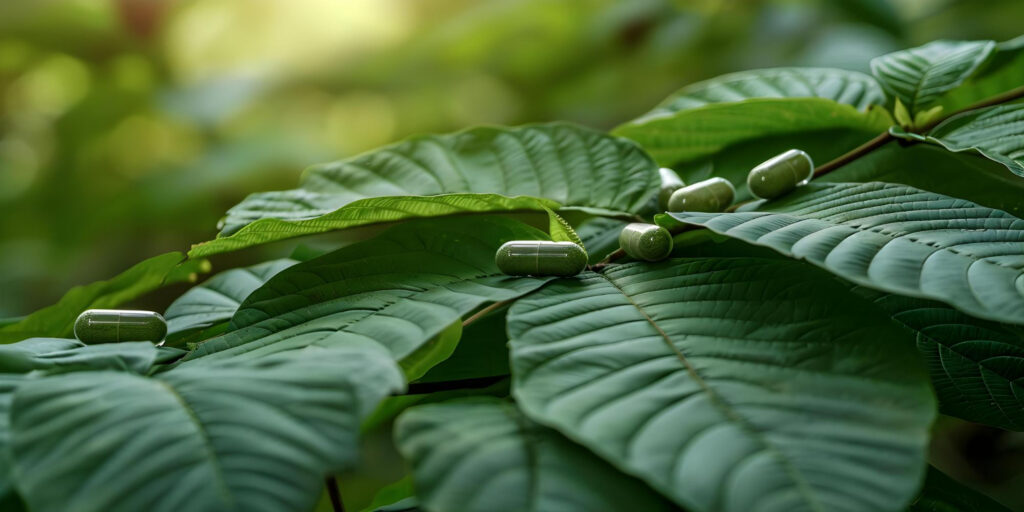
It sits on the same shelf as energy shots and herbal pills, but MGM-15 is a synthetic opioid. Knowing what it actually is can change the next decision you make.
Clinically reviewed by the Peachtree Detox & Residential clinical team · June 2026
Somewhere along GA-54 in Fayetteville, between the Kroger run and the drive home, there is a smoke shop with a cooler of brightly labeled shots and a rack of tablets that promise calm, focus, or a little relief. One of those products may contain MGM-15. The packaging looks like a supplement. The chemistry inside is an opioid. That gap, between how it is sold and what it does to a body, is exactly why families across Peachtree City, Newnan, and Jonesboro are searching for answers at odd hours.
If you found this because of a label you do not recognize, a loved one acting differently, or your own growing worry that what started as an herbal pick-me-up has become something you cannot stop, you are in the right place. The plain truth is that MGM-15 carries the same dangers as any opioid, and the same medical tools that help with opioid withdrawal apply here. Care for this exists close to home, through medically supervised opioid detox in the Atlanta area, and it begins with understanding what you are actually dealing with.
What MGM-15 Actually Is
MGM-15 is a semi-synthetic opioid. In plain terms, that means it starts with a compound found in a plant and is then changed in a lab to make it stronger. The plant is kratom, a tree native to Southeast Asia whose leaves have been used for energy and pain for generations. You may also see MGM-15 written as dihydro-7-hydroxymitragynine, shortened to DH-7OH-MIT or DHM. The long name points to where it comes from: it is a lab-made cousin of 7-hydroxymitragynine, one of the active ingredients in the kratom leaf.
Here is the part that matters for safety. MGM-15 acts as an agonist at the mu- and delta-opioid receptors. In everyday language, an agonist is a key that fits a lock and turns it on, and the mu-opioid receptor is the same lock that morphine, oxycodone, and fentanyl turn. MGM-15 is more potent at the mu-opioid receptor than 7-hydroxymitragynine itself, the natural compound it was built from. So the body does not experience MGM-15 as a gentle herb. It experiences it as a strong opioid.
The compound was first reported in scientific literature back in 2014, but it stayed in the lab for a decade. It only began showing up as a designer drug, sold for people to actually take, in early 2025, first in the United States. That is recent. It means there is no long human track record, no decades of dosing data, and no body of safety research the way there is for older medications. For a substance that turns on the same receptors as fentanyl, that absence of data is not reassuring. It is the danger.
Why “Made From Kratom” Does Not Mean Safe
A lot of people meet kratom first and MGM-15 second, so the connection deserves a clear, calm explanation. The leaf itself can build a real kratom dependence over time, but MGM-15 is not that leaf. It is a concentrated, lab-altered piece of it, and the difference in strength is enormous.
The U.S. Food and Drug Administration has been blunt about this. In a natural kratom leaf, the compound 7-hydroxymitragynine, often shortened to 7-OH, occurs only in trace amounts, roughly 0.01 to 0.04 percent by dry weight. That is a tiny fraction. The newer products on store shelves are different animals entirely. Manufacturers concentrate 7-OH or build semi-synthetic versions of it, then press them into tablets, gummies, drink mixes, and shots. The FDA has been clear that these concentrated and semi-synthetic 7-OH products are far more dangerous than traditional kratom leaf, because they deliver an opioid dose the leaf never could.
None of it is regulated the way medicine is. These products are sold in smoke shops, gas stations, corner stores, and online, often marketed as if they were harmless herbal supplements. There is no pharmacist, no standardized dose, and frequently no honest label. In response, the FDA has issued warning letters, seized 7-OH opioid products, and recommended a scheduling action under the Controlled Substances Act, the federal law that classifies controlled drugs. A product can be on a shelf in Tyrone today and the target of a federal restriction tomorrow, and the chemistry inside the wrapper does not wait for the law to catch up.
How Strong Is It, Really?
The honest answer is that no one can tell you the exact potency of MGM-15 in a human being, and that uncertainty is the whole problem. To understand the chemical family it belongs to, researchers have studied close relatives. A related fluorinated analog called MGM-16, a slightly different lab variant, showed roughly 240 times the potency of morphine in animal studies. That number is an illustration of how forceful this class of chemicals can be, not a measurement of MGM-15 in people. We share it the way a doctor would: as a warning about the neighborhood this drug lives in, not as a dosing fact.
Now put that next to how these products are actually sold. The shot in the cooler does not come with a verified milligram count you can trust. One batch may be mild and the next may be many times stronger, and there is no way to know by looking. With most substances, an unpredictable dose means an unpredictable high. With an opioid, an unpredictable dose means an unpredictable risk of the breathing slowing or stopping. That is the line that separates an uncomfortable night from an emergency.
This is the same trap that makes the local street-drug supply so deadly, where the danger is contamination and concealment rather than any single named drug. It is the same pattern behind fentanyl-laced counterfeit pills across South Metro Atlanta and the spread of xylazine, the sedative known as tranq, across Georgia. MGM-15 fits the same emerging-threat story: a powerful compound, no reliable label, and a buyer who has no way to measure what they just took.
The Dangers Are Opioid Dangers
Because MGM-15 is an opioid, the risks are not mysterious. They are the well-documented dangers of the opioid class, which means they are serious and also, importantly, treatable. There are three to understand.
- Overdose through respiratory depression. Opioids slow down the part of the brain that tells the body to breathe. In an overdose, the breathing becomes shallow, then slow, then stops. With an unlabeled product of unknown strength, a dose that felt fine last week can be too much this week. This is the danger that ends lives, and it is the reason naloxone, the opioid-reversal medication sold as Narcan, belongs in any home where opioid use is a possibility.
- Dependence. Taken regularly, opioids retrain the body to expect them. The brain dials back its own natural signals because the drug is doing the work, so the person needs the substance just to feel normal. This is not a character flaw or a lack of willpower. It is a physical change, and it can happen faster than people expect.
- Withdrawal. Once the body depends on an opioid, stopping triggers withdrawal: deep body aches, sweating, chills, nausea, diarrhea, anxiety, and a craving that can feel impossible to outlast. Opioid withdrawal is rarely fatal on its own, but it is miserable enough that many people return to use simply to make it stop. That is why medical support changes the outcome so dramatically.
Opioid withdrawal follows a fairly predictable arc, hour by hour, and the short version is reassuring: the worst of it is survivable, manageable, and far easier to get through with the right medical care than without it.
Why Stopping at Home Is the Risky Choice
It is a natural instinct. You realize a product has a hold on you or on someone you love, so you decide to just stop, white-knuckle through a hard few days, and put it behind you. The trouble is that quitting an opioid cold turkey at home is where a lot of recoveries stall before they start. The craving and the physical symptoms peak together, willpower runs out, and the risk of returning to use, often at a dose the body can no longer handle, climbs.
Medical opioid-detox protocols exist precisely to break that cycle, and they are the same whether the opioid is heroin, oxycodone, fentanyl, or a kratom-derived compound like MGM-15. Under medical monitoring, the body’s vital signs are watched and the worst symptoms are managed with medication, so withdrawal becomes something you move through rather than something you flee. Where it is clinically appropriate, medication-assisted treatment can change everything. Buprenorphine, the active ingredient in Suboxone, is a partial opioid that settles onto those same mu-opioid receptors and quiets withdrawal and craving without the full force of a stronger opioid. At Peachtree Detox & Residential, medication-assisted treatment options including buprenorphine are available when the clinical picture calls for them, and whether any medication fits is a decision made for the individual, with our medical team, not from a brochure.
Detox is the stabilizing first step, the part where the body gets clear and steady. It is not the whole of recovery. The work of staying well, understanding what drove the use, and building a life that does not need the substance happens in the care that follows, through structured opioid rehab in the Atlanta area. It would be dishonest to call clearing the drug the finish line. It is the foundation everything else is built on.
What This Means for Families in South Metro Atlanta
If you are a parent in Fayetteville reading a label you found in a backpack, or a partner in Peachtree City who has watched someone slide from herbal shots into something heavier, you are not overreacting by taking this seriously. An opioid sold as a supplement is still an opioid. The instinct that told you something was wrong was accurate.
What makes MGM-15 especially hard for families is how legitimate it looks. There is no back-alley exchange to catch, no obvious contraband, just a receipt from a store along the same corridors you drive every day, from the strips near I-85 to the shops scattered across Fayette, Coweta, and Clayton counties. A person can build a real physical dependence on a product they bought at a gas station without ever feeling like they crossed a line. That is not a reason for shame. It is a reason to get clear information and reach for help early, before an unknown dose makes the decision for you.
The encouraging part is that this is known territory for the people who treat opioid use. The chemistry is new, but the body’s response and the medical answer are well understood. A medically supervised detox does not require you to have all the answers before you reach out. It requires one phone call or one click to start a conversation.
From a Smoke-Shop Shelf to a Safe First Step in Fayetteville
Whether the worry is your own or it belongs to someone you love, MGM-15 is treatable, and the path through it starts with a single conversation, not a commitment you have to be certain about. Peachtree Detox & Residential sits right on GA-54 in Fayetteville, a short drive for families across Peachtree City, Newnan, Tyrone, and Jonesboro, and our team can talk through what an opioid detox actually looks like and what comes after. When you reach out through our admissions team, we will listen first, and we can help you verify your insurance benefits so cost is one less unknown. If you are not ready today, that is okay. Save this, read it again, and reach out when the time is right. When you are ready to take that first step, we will be here to help you take it safely.
Frequently Asked Questions About What MGM-15 Is
MGM-15 is an opioid, not a benzodiazepine. It is a semi-synthetic compound derived from 7-hydroxymitragynine, one of the active ingredients in the kratom plant, and it acts on the same mu-opioid receptors as morphine and fentanyl. That is why its dangers are opioid dangers, including slowed breathing in overdose, physical dependence, and withdrawal, and why opioid-detox protocols are the right medical approach. If you are unsure what a product contains, treat it as an opioid and talk with a medical provider before stopping abruptly.
In a natural kratom leaf, the opioid-active compound 7-OH exists only in trace amounts, roughly 0.01 to 0.04 percent by dry weight. Products like MGM-15 are concentrated or lab-altered, so they deliver a far stronger opioid dose than any leaf. The FDA has flagged these concentrated and semi-synthetic 7-OH products as significantly more dangerous than traditional kratom. Because they are sold unregulated in smoke shops and gas stations, the dose in any given shot or tablet is often unknown, which makes overdose risk unpredictable.
Peachtree Detox & Residential provides medically supervised detox on GA-54 in Fayetteville, GA, serving Peachtree City, Newnan, Tyrone, Jonesboro, and the surrounding Fayette, Coweta, and Clayton county communities. Care includes medical monitoring during withdrawal and, where clinically appropriate, medication-assisted treatment such as buprenorphine. The first step is a conversation with the admissions team, who can also verify your insurance benefits. If a life-threatening overdose is happening, call 911 immediately, or call or text 988 for the Suicide and Crisis Lifeline.
Sources
- U.S. Food and Drug Administration. (n.d.). Hiding in plain sight: 7-OH products. Retrieved from: https://www.fda.gov/drugs/information-consumers-and-patients-drugs/hiding-plain-sight-7-oh-products. Accessed on June 22, 2026.
- U.S. Food and Drug Administration. (2025). FDA takes steps to restrict 7-OH opioid products threatening American consumers. Retrieved from: https://www.fda.gov/news-events/press-announcements/fda-takes-steps-restrict-7-oh-opioid-products-threatening-american-consumers. Accessed on June 22, 2026.
- National Institute on Drug Abuse. (n.d.). Kratom. Retrieved from: https://nida.nih.gov/research-topics/kratom. Accessed on June 22, 2026.
- Substance Abuse and Mental Health Services Administration. (n.d.). SAMHSA’s national helpline. Retrieved from: https://www.samhsa.gov/find-help/helplines/national-helpline. Accessed on June 22, 2026.